
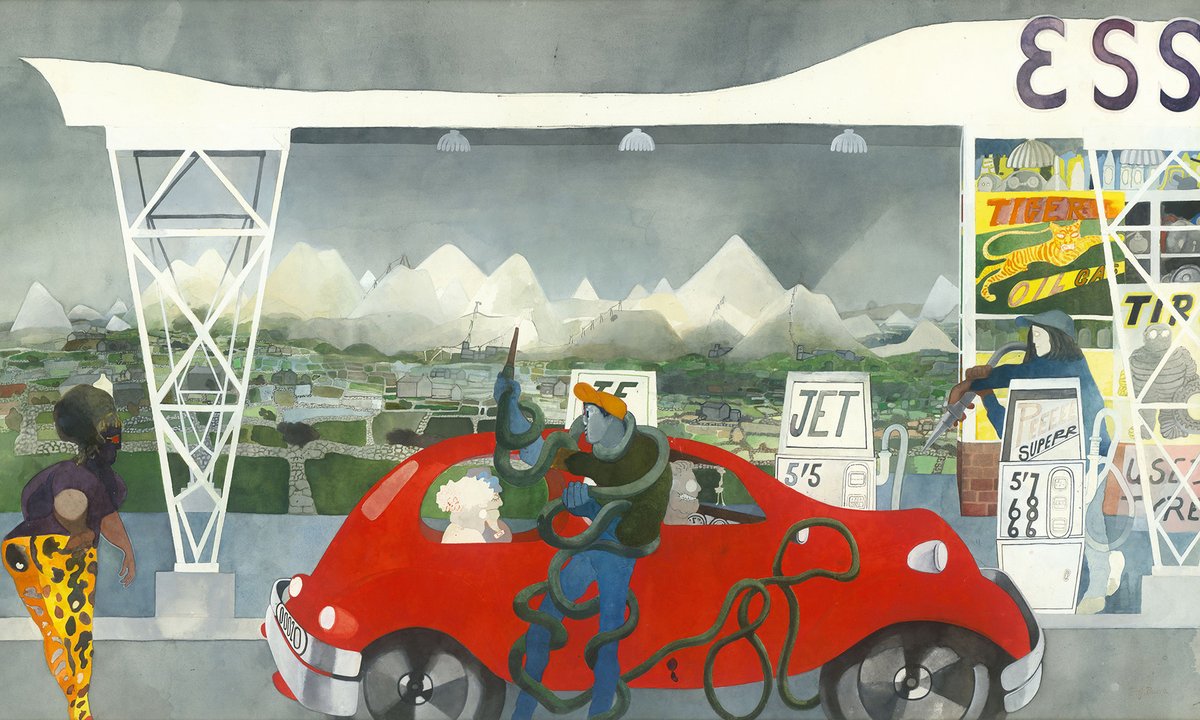
Tate Britain is staging a major retrospective of Edward Burra (1905-76), the English painter known for his vivid depictions of urban underworlds, jazz clubs, and later brooding landscapes. The exhibition, curated by Thomas Kennedy, features over 80 paintings and newly discovered archival material spanning Burra's career from the 1920s to the 1970s, including rarities like 'Cornish Clay Mines' (1970) from a private collection. It also draws on Burra's extensive correspondence—described by his biographer Jane Stevenson as 'grubby letters'—which offers unprecedented insight into his personal world and chronic pain from rheumatoid arthritis and anemia.
This retrospective matters because Burra, despite participating in the 1936 London International Surrealist Exhibition and achieving success in his lifetime, has been largely overlooked in the canon of Modern British art. His fierce resistance to categorization and his withering attitude toward art-world discussion contributed to his obscurity. By presenting his work alongside that of Ithell Colquhoun (on the same ticket), Tate Britain aims to reassert Burra's significance as a unique quasi-Surrealist voice, connecting his exuberant stage designs, watercolor technique, and dark wartime visions to contemporary audiences.