
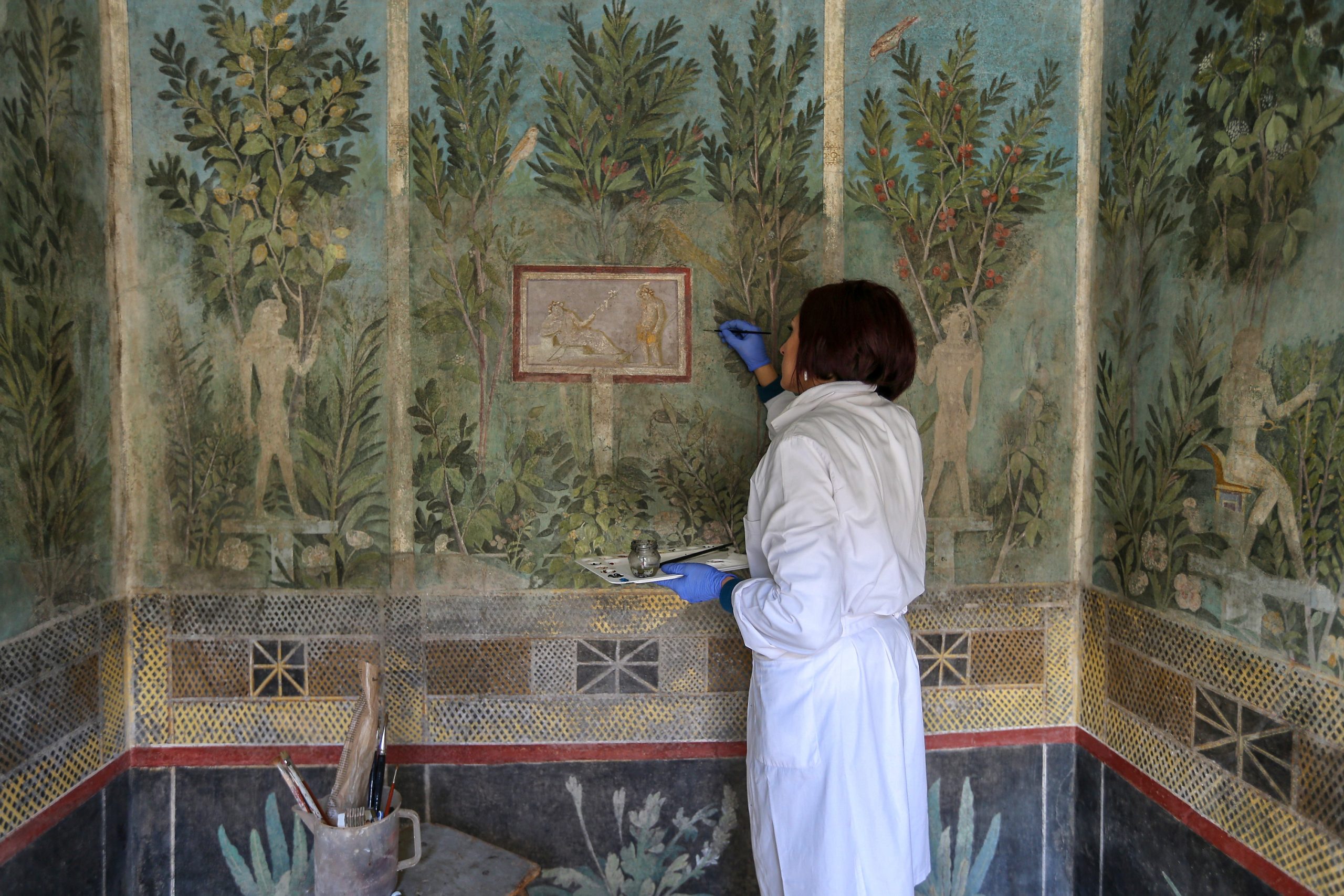
Archaeologists have uncovered a series of remarkable discoveries at Pompeii, the ancient Roman city buried by Mount Vesuvius in 79 C.E. Recent finds include life-sized statues of a priestess and a man from a tomb, frescoes depicting Dionysian rituals and mythological scenes, an extravagantly decorated 'tiny house' called the House of Phaedra, and evidence of aspirational interior design. These artifacts, unearthed in suburban villas and tombs, range from a bejeweled priestess statue to children's gladiator doodles and ancient fast-food counters, revealing new details about daily life in the Roman Republic.
These discoveries matter because they continue to reshape our understanding of Roman society, religion, and domestic life, even after centuries of excavation. The finds highlight Pompeii's enduring archaeological value as a uniquely preserved time capsule, offering insights into everything from elite religious practices to the everyday habits of ordinary citizens. Each new artifact broadens the historical record, demonstrating that the site still holds significant secrets and remains a vital resource for scholars and the public alike.