
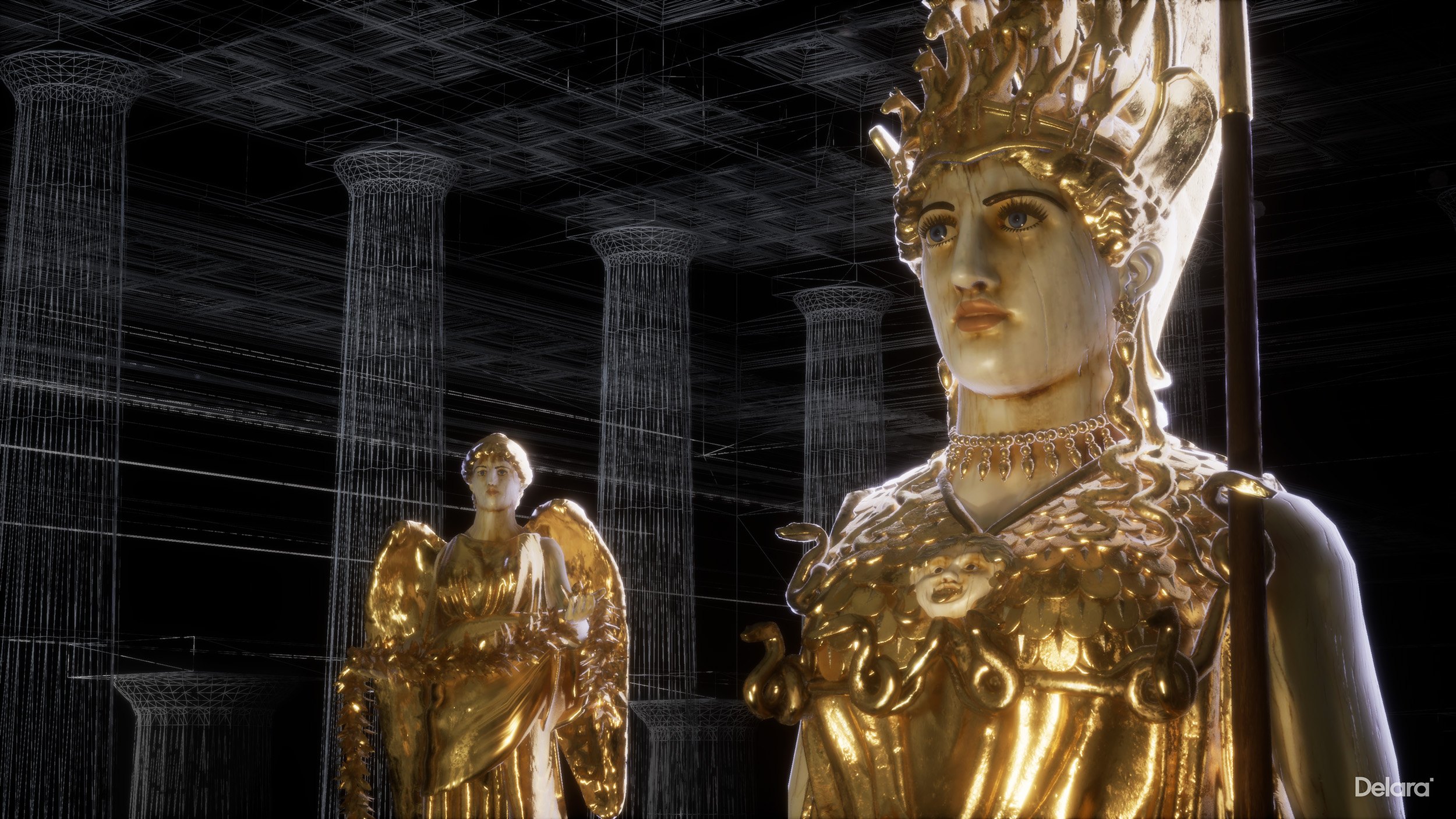
Archaeologist Juan de Lara of Oxford University has published a paper challenging the long-held belief that the Parthenon in Athens was a brightly lit, open space. Using a 3D model that simulates natural and artificial light, Lara argues the temple was actually dark and dim, with sunlight barely reaching the statue of Athena's waist and a wooden ceiling blocking any translucency from marble roof tiles. He also suggests that hand-held torches, rather than numerous lamps, were used for artificial light, and that the reflective pool in front of Athena's statue did little to illuminate the space.
This finding matters because it overturns a centuries-old assumption rooted in Enlightenment thinking, which associated darkness with ignorance and corruption. By demonstrating that darkness may have been an intentional architectural feature used to inspire awe and reverence, Lara's research reshapes our understanding of ancient Greek religious spaces and challenges modern visualizations of the Parthenon as a radiant, open temple. The study highlights how cultural biases can influence historical interpretation and opens new questions about rituals and access within the Parthenon.