
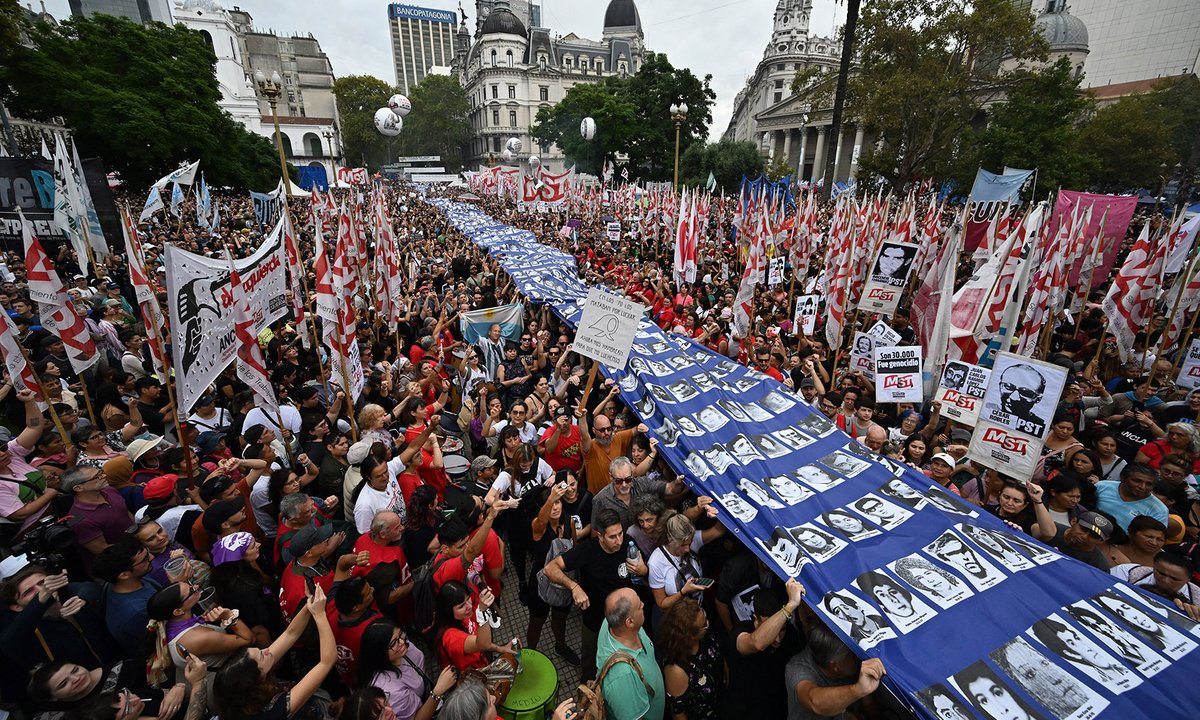
Argentina's President Javier Milei has escalated his campaign to rewrite the history of the country's 1976-1983 dictatorship by closing art and human-rights spaces on the grounds of the ESMA Museum and Site of Memory in Buenos Aires, a former clandestine prison turned memorial and UNESCO World Heritage Site. In January, the Haroldo Conti Cultural Centre was shuttered for 'internal restructuring,' with 50 of its 87 employees fired; in early April, the government halted operations at Espacio Memoria, suspending salary payments and funding pending an audit. Both centres are public institutions managed by the Human Rights Secretariat, which has undergone mass layoffs and changes under Milei's administration.
This matters because it represents a direct assault on cultural institutions dedicated to preserving the memory of state terror, where over 30,000 people were disappeared. By closing these spaces and demanding that programming avoid terms like 'memory,' 'truth,' and 'justice,' Milei's government is attempting to erase the historical record of the dictatorship and silence the voices of victims' families. The closures threaten not only Argentina's cultural heritage but also the broader global principle that art and memory spaces must remain independent from political revisionism.