
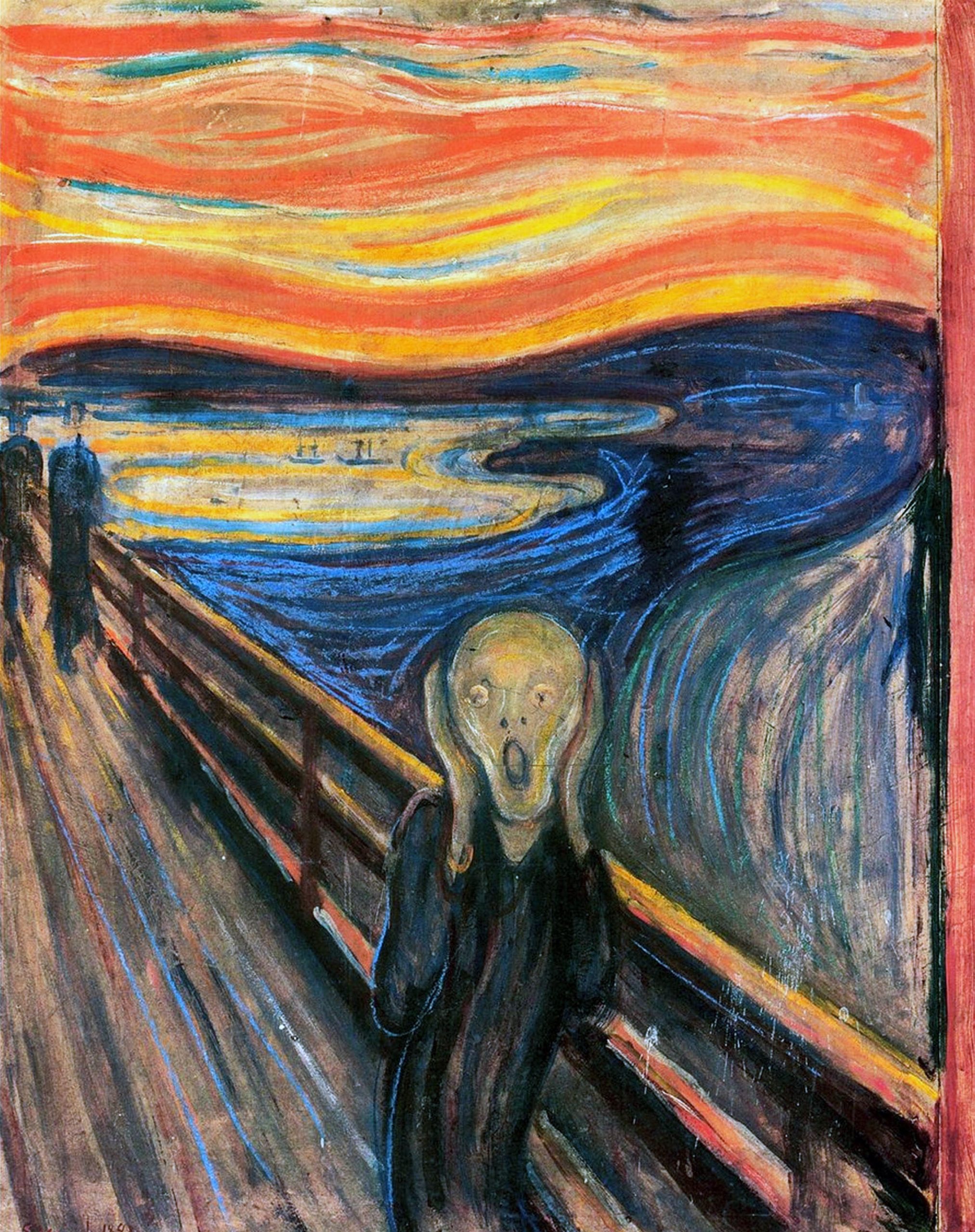
Edvard Munch, the Norwegian Expressionist and Symbolist painter, often worked and stored his paintings outdoors on the grounds of his 45-acre estate, Ekely. This unconventional approach led to many works suffering damage from the elements, including water damage, dog paw prints, and an enduring urban legend that white smears on his iconic painting *The Scream* (1893) were bird droppings. In 2016, researchers at the University of Antwerp used X-ray radiation to debunk this myth, proving the marks were actually candle wax.
This story matters because it highlights the unique challenges of conserving Munch’s oeuvre, which was shaped by his preference for painting en plein air and his relaxed attitude toward storage. The debunking of the bird-droppings legend also illustrates how art historical myths can persist and how scientific analysis can correct them, deepening our understanding of both the artist’s methods and the material history of his masterpieces.