
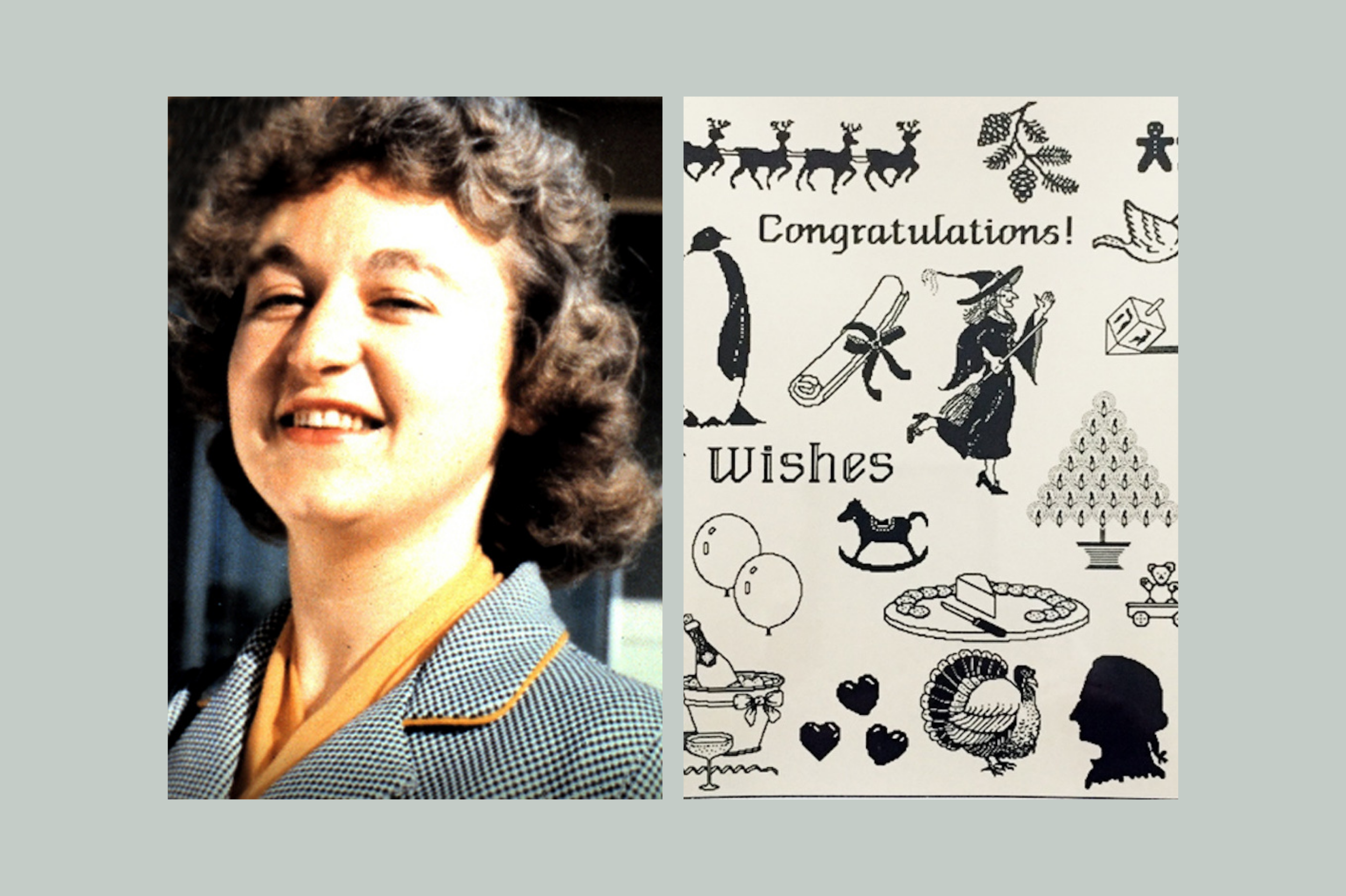
Joan Shogren, a chemistry graduate from San José State University (SJSU) in the early 1950s, created some of the world's first computer-generated art in 1963 while working as a secretary in the chemistry department. Collaborating with graduate student Jim Larson and assistant professor Ralph Fessenden, she developed a theory that computers could create art if given "rules" of proportion, balance, and center of interest. Fessenden translated her "laws of art" into code on an IBM 1620 computer, producing artworks that were printed as number arrays and later hand-colored by artist Marvin Coon. Shogren exhibited these works in May 1963 at the campus bookstore, recognized as the first public display of computer art. Two decades later, she was commissioned by software company T/Maker to create the first clip art, "ClickArt," released in 1984 for Macintosh computers, designed pixel by pixel.
This story matters because it reclaims a largely forgotten pioneer in the history of digital art, predating the explosion of computer art in the 1980s by two decades. Shogren's work anticipated contemporary debates about AI-generated art, as evidenced by a 1966 newspaper column that questioned whether her innovation would strip art of "personally-human expression." Her contributions—from early computer-generated imagery to the first commercial clip art—underscore the often-overlooked role of women and non-traditional artists in shaping the intersection of technology and visual culture. Recognizing Shogren's legacy challenges the dominant narrative that computer art emerged primarily from male programmers and fine artists in later decades.