
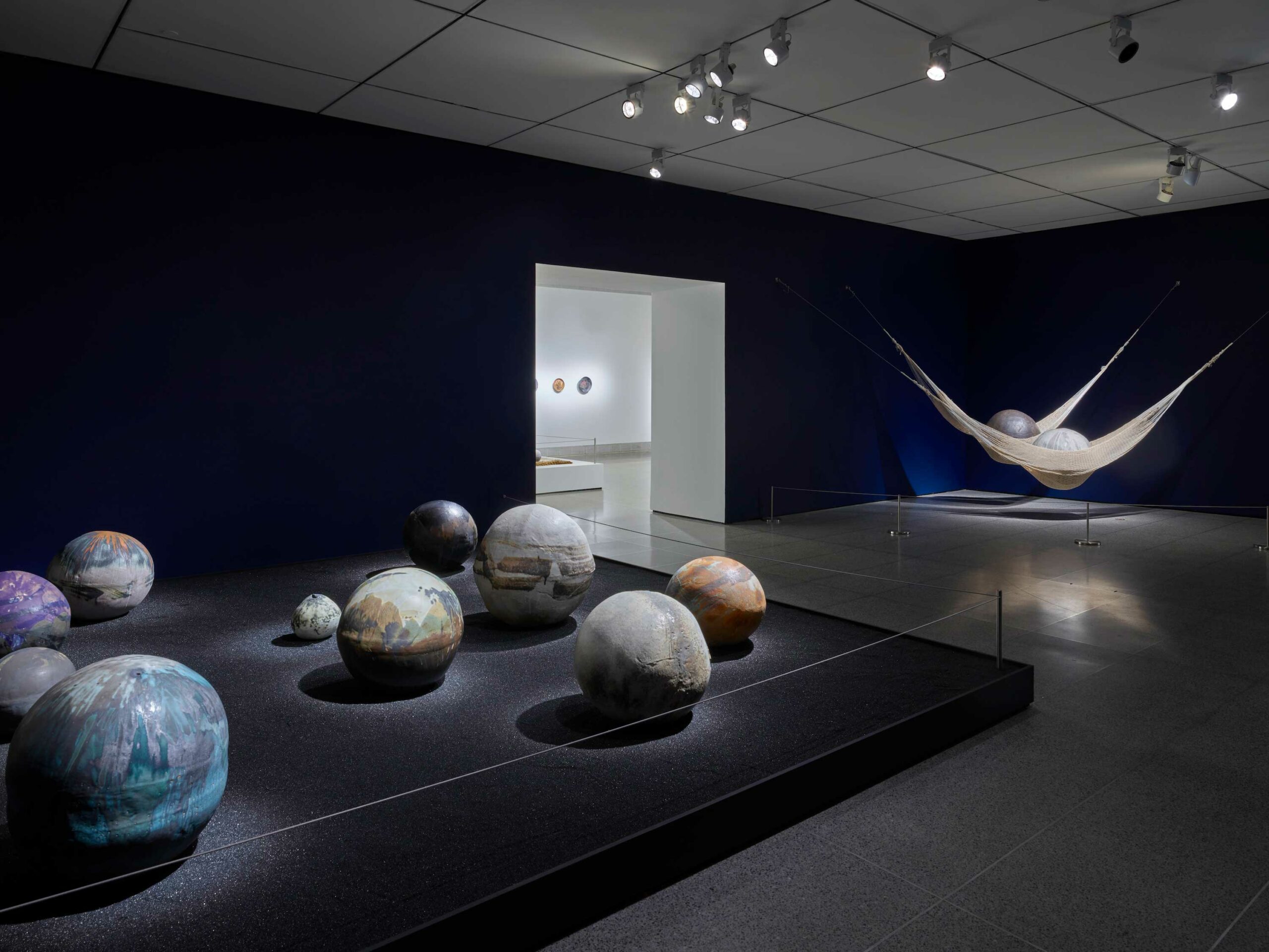
The article reviews "Toshiko Takaezu: Worlds Within" at the Museum of Fine Arts, Houston, the artist's first nationally touring retrospective in 20 years. Organized by the Isamu Noguchi Foundation and Garden Museum, the exhibition features some 100 artworks from the 1950s until her death in 2011, including large-scale ceramics, weavings, and paintings. It traces Takaezu's journey from her childhood on a Maui watercress plantation to her transformative studies at Cranbrook Academy of Art and a pivotal trip to Japan, where she studied Zen Buddhism and worked under various ceramicists.
The retrospective matters because it repositions Takaezu as a pioneering figure who expanded the boundaries of ceramic art, emphasizing the invisible interior spaces of her closed forms and rejecting reductive associations with Zen spirituality. By showcasing her little-seen weavings and paintings alongside her celebrated ceramics, the exhibition offers a comprehensive view of her holistic approach to artmaking, challenging conventional narratives about mid-century American ceramics and highlighting the influence of her Okinawan heritage and Japanese training.