
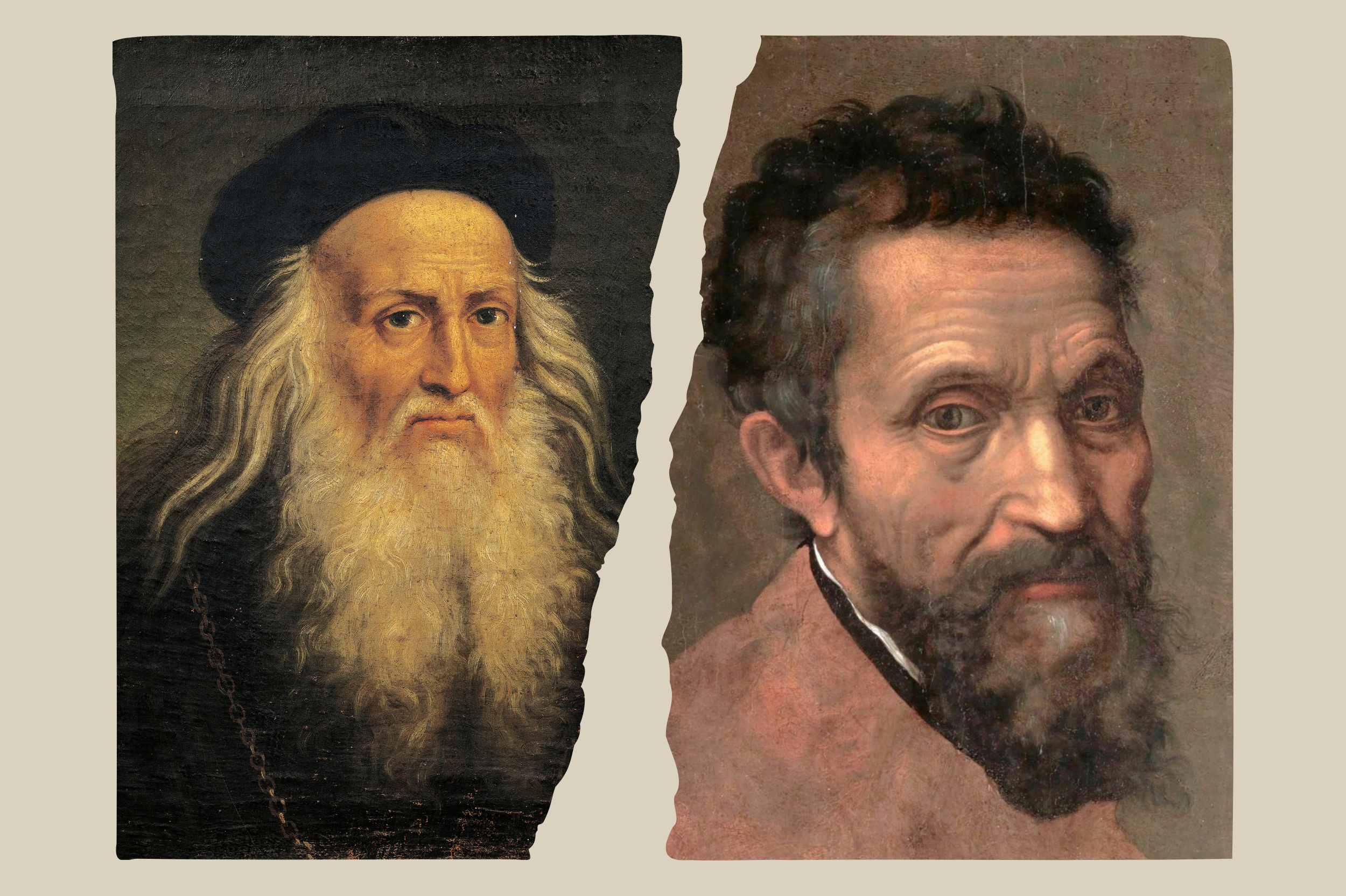
Leonardo da Vinci and Michelangelo, two of history's most celebrated artists, had a well-documented rivalry rooted in competition for commissions, class differences, and artistic disagreements. Their first known encounter occurred when Leonardo served on a committee deciding the placement of Michelangelo's *David* (1501), where Leonardo reportedly mocked the sculpture by sketching it as the sea god Neptune. Their rivalry escalated when both were commissioned to paint opposing murals in Florence's Salone dei Cinquecento—Leonardo's *Battle of Anghiari* and Michelangelo's *Battle of Cascina*—neither of which was completed. The artists traded insults over the years, with Michelangelo criticizing Leonardo's view of sculpture as inferior to painting, and Leonardo deriding Michelangelo's muscular figures as resembling "a bag of walnuts."
This article matters because it humanizes two towering figures of the Renaissance, revealing that their legendary status was forged amid personal animosity and fierce professional competition. Their rivalry not only shaped their individual careers but also influenced the development of Western art, as their opposing philosophies—Leonardo's dramatic naturalism versus Michelangelo's emotional humanism—defined key debates about artistic purpose. Understanding their "beef" provides insight into the competitive, patronage-driven art world of 16th-century Florence and underscores how personal conflicts can drive creative innovation.