
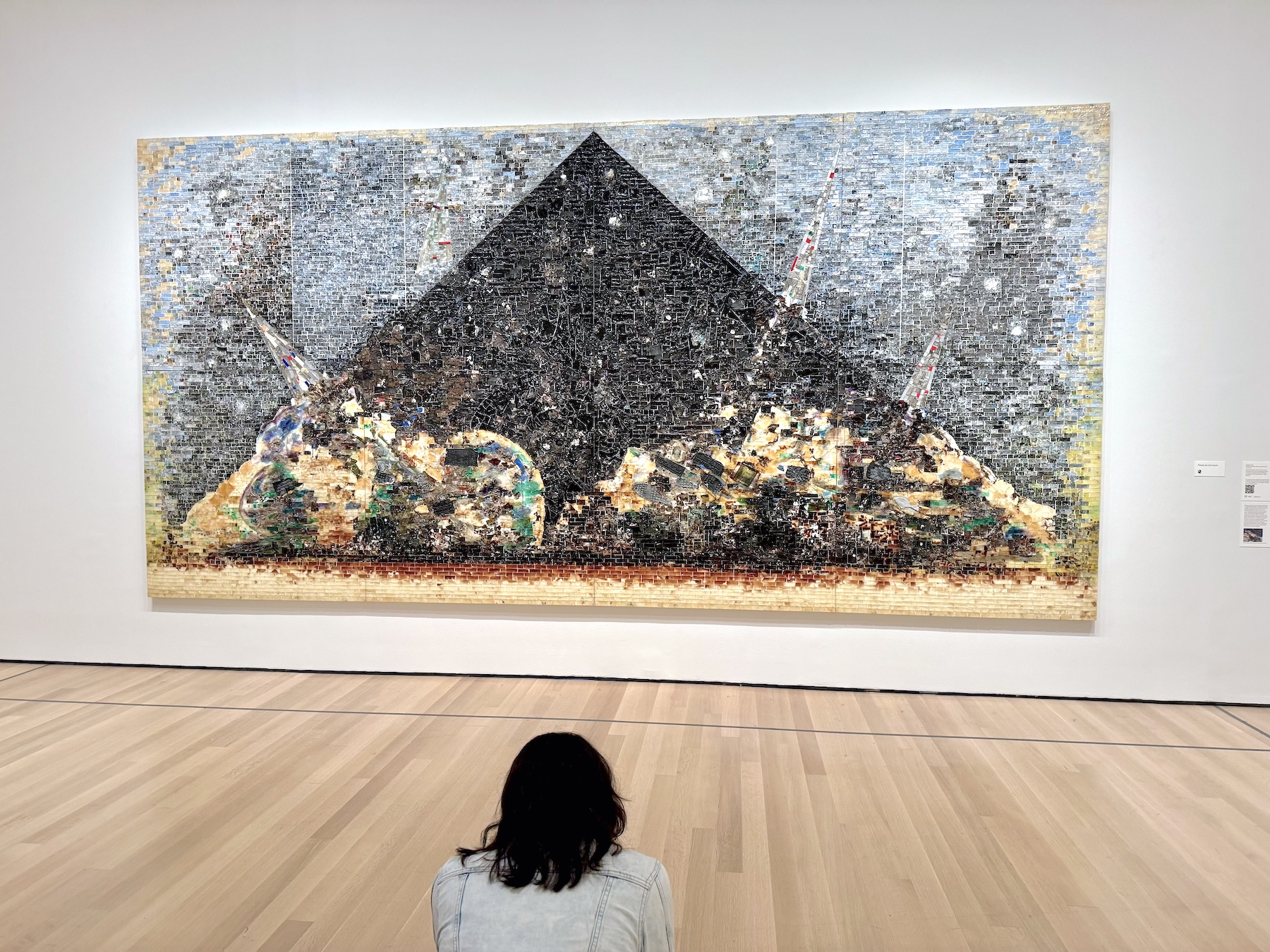
Jack Whitten's monumental mosaic-painting "9.11.01" (2006) is the focus of this article, which examines the work on view at the Museum of Modern Art. The painting, created in response to the September 11 attacks, uses abstract forms—a cracked black pyramid with dagger-like spines and bootprints—to evoke the trauma of that day. Whitten, who witnessed the first plane strike from his studio in Manhattan, embedded ash and wreckage fragments into the surface, blending abstraction with historical memory.
The article argues that Whitten's painting deserves wider recognition for its subtle fusion of abstraction and history painting, comparing it to Picasso's "Guernica." By capturing the psychological experience of traumatic memory—dominating yet fragmentary—the work challenges viewers to reconsider how art can address catastrophic events without literal depiction. This analysis underscores Whitten's importance as an artist who expanded the possibilities of abstract painting to engage with contemporary history.