
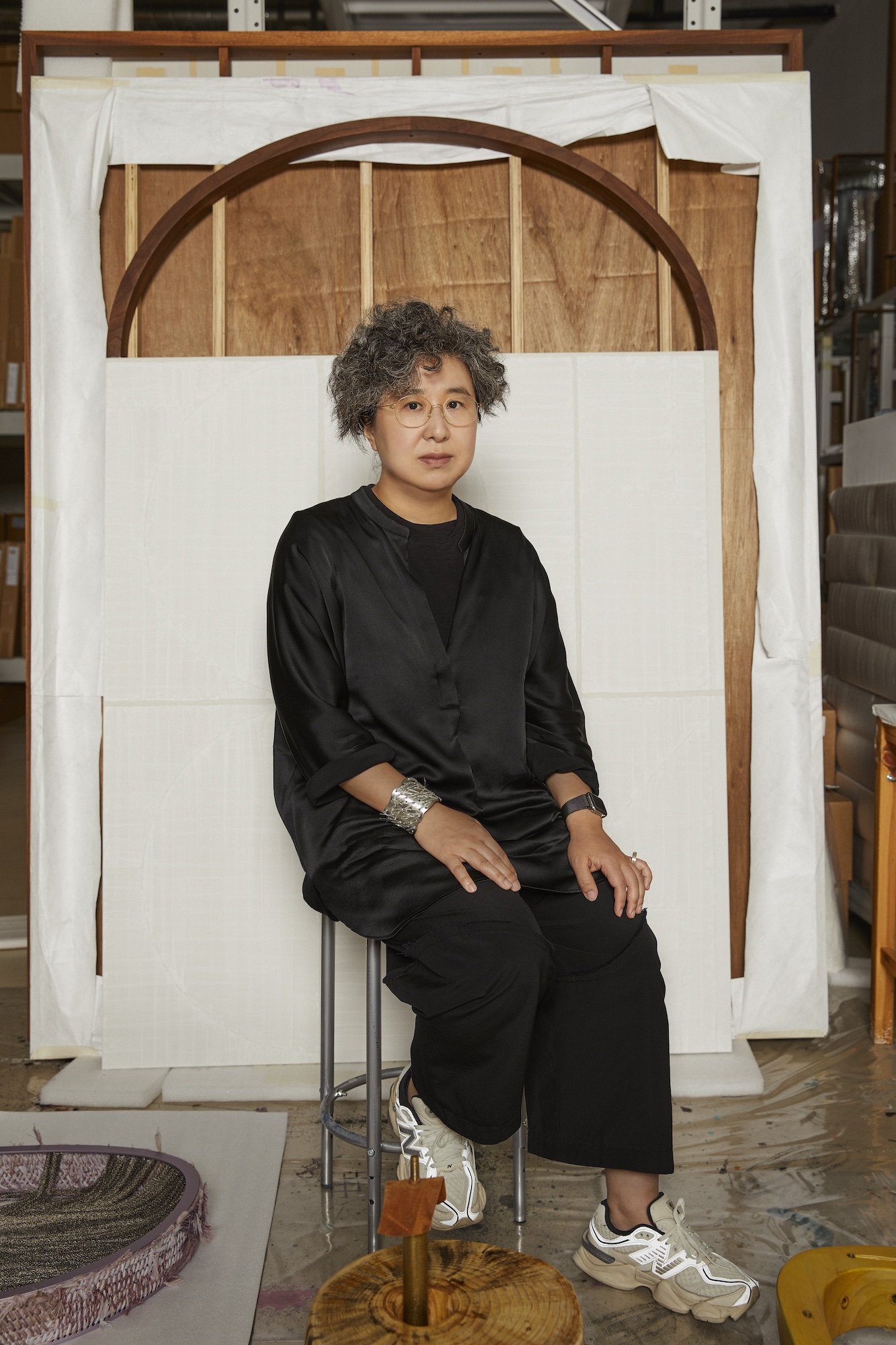
Suki Seokyeong Kang, a South Korean artist known for blending traditional Korean heritage with contemporary abstract forms, died on Sunday at age 47 (48 in Korean reckoning) after a battle with cancer. Her New York representative, Tina Kim Gallery, confirmed the cause. Kang's work spanned painting, textiles, sculpture, and installation, often incorporating postminimalist structures, craft techniques, and industrial materials. Notable series include her precarious "Grandmother Tower" sculptures and "Mountain" pieces made from curved steel and thread. She was born in Seoul in 1977, studied at Ewha Womans University and the Royal College of Art in London, and later became a professor of painting.
Kang's death marks the loss of a leading artist of her generation who gained international recognition through major biennials, including the Gwangju Biennale, Shanghai Biennale, and Venice Biennale. Her work was celebrated for its quiet humor, tactile presence, and ability to transform modest materials into profound explorations of space, individuality, and Korean cultural history. Her legacy is significant for bridging traditional East Asian ink painting and craft with contemporary art, influencing discourse on abstraction, performance, and the body in art.