
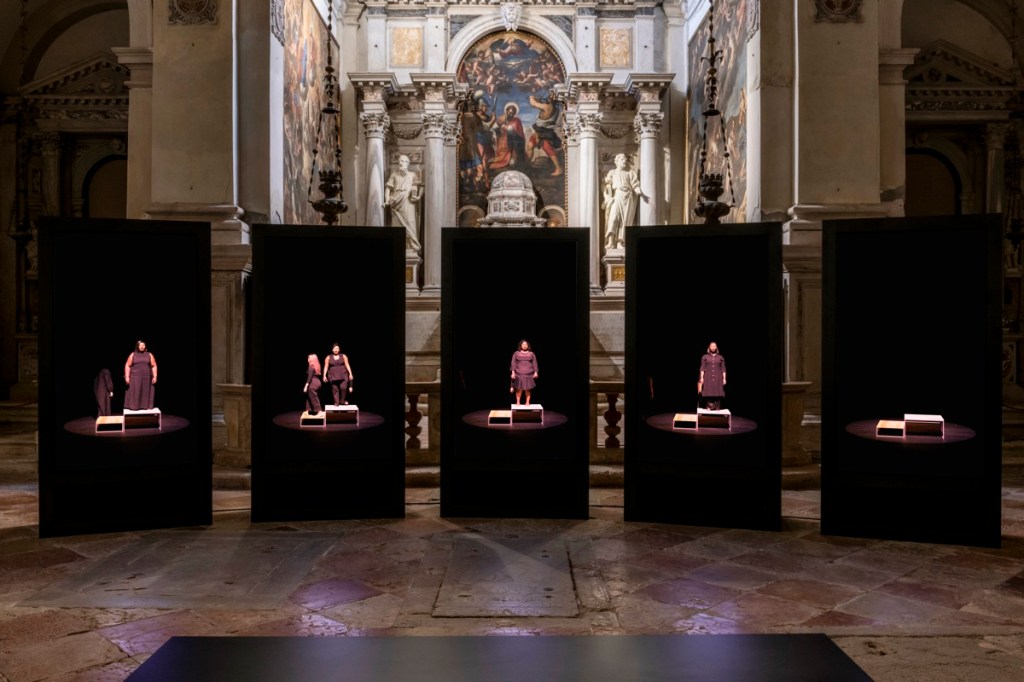
South African artist Gabrielle Goliath’s planned pavilion for the South Africa Pavilion at the Venice Biennale was canceled by culture minister Gayton McKenzie, who deemed it “highly divisive.” Despite the cancellation, Goliath has installed her work, a multi-screen iteration of her ongoing performance series *Elegy*, at the Chiesa di Sant’Antonin, half a mile from the Giardini. The new piece mourns victims of atrocities including South African femicide, the Herero and Nama genocide, and the death of Gazan poet Hiba Abu Nada, killed by an Israeli airstrike. Goliath stated that McKenzie explicitly demanded removal of the Palestinian content while deeming the other subjects acceptable.
This controversy matters because it highlights the art world’s uneven treatment of political content, particularly regarding Palestinian life. Goliath’s work—and its censorship—underscores how governments may permit mourning for certain victims while suppressing commemoration of others, even in a country like South Africa that has brought a genocide case against Israel at the International Court of Justice. The incident also raises broader questions about artistic freedom, state censorship, and the limits of permissible grief in public discourse.