
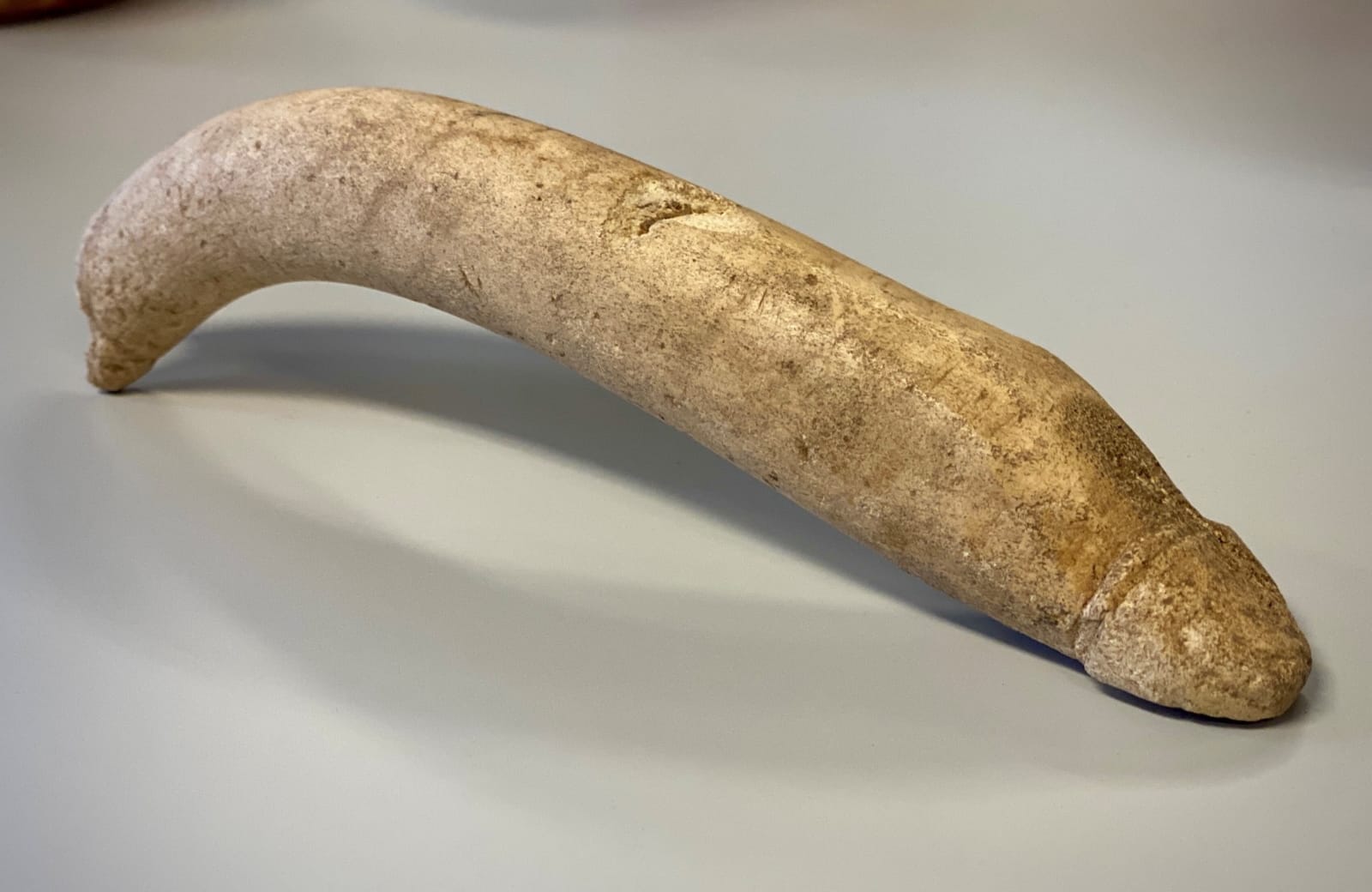
Archaeologists at the Valkhof Museum in Nijmegen discovered a rare, eight-inch Ancient Roman phallus carved from bone while cataloging a massive backlog of 16,000 archaeological boxes. The artifact was found alongside high-quality Roman tableware during an €8 million government-funded inventory project aimed at processing collections from defunct storage depots in the province of Gelderland.
This discovery is significant due to the object's material and size; while phallic imagery was common in Roman culture as a symbol of fertility and protection against evil, such items were typically made of stone or metal rather than organic bone. The find highlights the immense historical wealth contained within uncatalogued museum archives and provides further insight into the daily spiritual and domestic lives of Romans living in the Gelderland region.