
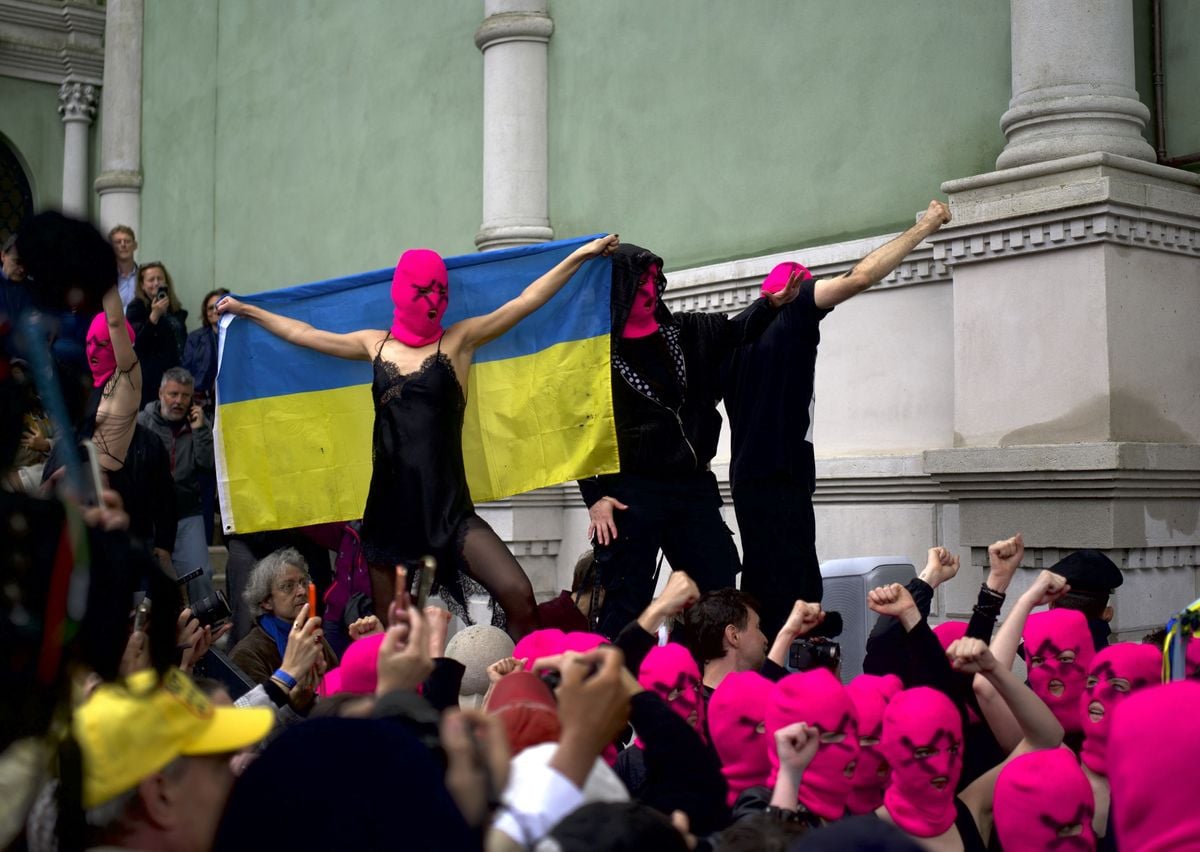
Protests against the reopening of the Russian pavilion erupted at the Venice Biennale and spread across the city on the second day of the 61st edition. Visual artist Shalva Nikvashvili, who grew up in post-Soviet Georgia, began a silent performance wearing a muzzle-style mask and carrying a chair, holding a sign reading “La Biennale di Venezia” and “violence.” Shortly after, a group of about 20 protesters led by Pussy Riot co-founder Nadya Tolokonnikova gathered outside the Russian pavilion, chanting against Vladimir Putin, waving Ukrainian flags, and releasing a pink smoke flare. The protests followed the Biennale's decision to allow Russia to participate for the first time since its 2022 invasion of Ukraine, despite calls from artists and politicians to exclude the country.
The protests matter because they highlight the ongoing tension between cultural institutions and geopolitical ethics, particularly regarding Russia's participation in international art events during its war in Ukraine. The European Union warned Italy that opening the Russian pavilion would breach EU sanctions, while the Biennale foundation defended its position by stating it “rejects any form of exclusion or censorship of culture and art.” The incident underscores the growing pressure on art organizations to take political stances, and the role of artists and activists in using the art world as a platform for protest. The Russian pavilion is set to close to the public on May 9, but its preview days have already sparked significant controversy.