
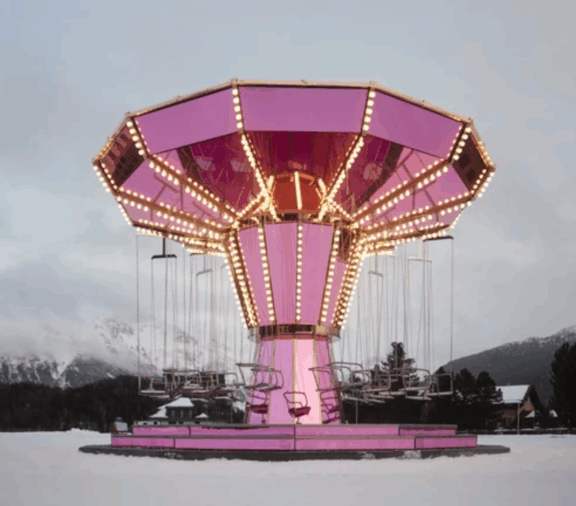
The article explores the intersection of art and playground design, highlighting how artists have created inspiring play spaces that double as works of art. It begins with the 1954 Museum of Modern Art competition for creative playground equipment, won by Virginia Dortch Dorazio's Fantastic Village, and discusses Isamu Noguchi's Playscapes, including his only U.S. installation in Piedmont Park, Atlanta, commissioned by the High Museum of Art in 1975. The piece then profiles four artist-designed playgrounds: Carsten Höller's Pink Mirror Carousel in St. Moritz, Toshiko Horiuchi MacAdam's Woods of Net in Japan, Niki de Saint Phalle's Tarot Garden in Italy, and others, each blending sculpture with interactive play.
This matters because it challenges the traditional separation between art and everyday life, positioning playgrounds as accessible public art that fosters creativity and community engagement. By showcasing how artists like Noguchi, Höller, and Horiuchi MacAdam have reimagined play spaces, the article underscores the growing recognition of playgrounds as legitimate artistic expressions, influencing both landscape architecture and contemporary art discourse. The upcoming exhibition at the High Museum of Art further validates this crossover, celebrating the 50th anniversary of Noguchi's Atlanta playscape.