
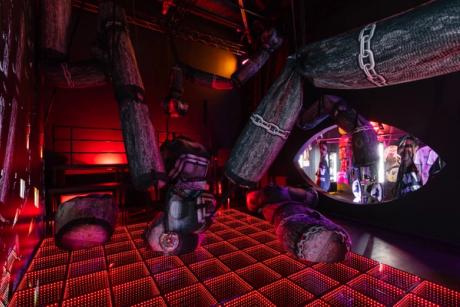
The Greek Pavilion at the 2026 Venice Biennale, titled "Grecia" and conceived as a drag artist, presents an S&M-inspired installation by artist and architect Andreas Angelidakis. The immersive space features a red neon-lit floor, soft sculptures resembling beanbags, fragmented marble columns wrapped in chains, and souvenirs bearing images of queer artists and the late activist Zak Kostopoulos (Zackie Oh). The pavilion aims to deconstruct the idea of a fixed national identity, exploring themes of queerness, fascism, and historical trauma.
The pavilion matters because it directly confronts the fascist origins of its own architecture—built in 1934 during a period of rising fascism in Europe—and challenges the enduring nationalist symbolism of national pavilions at the Venice Biennale. By reframing the pavilion as a queer, self-deconstructing character, Angelidakis critiques contemporary political echoes of authoritarianism and colonialism, linking the historical context to current global trends like "Trump-ism." The work raises urgent questions about how art institutions can reckon with their own problematic histories.