
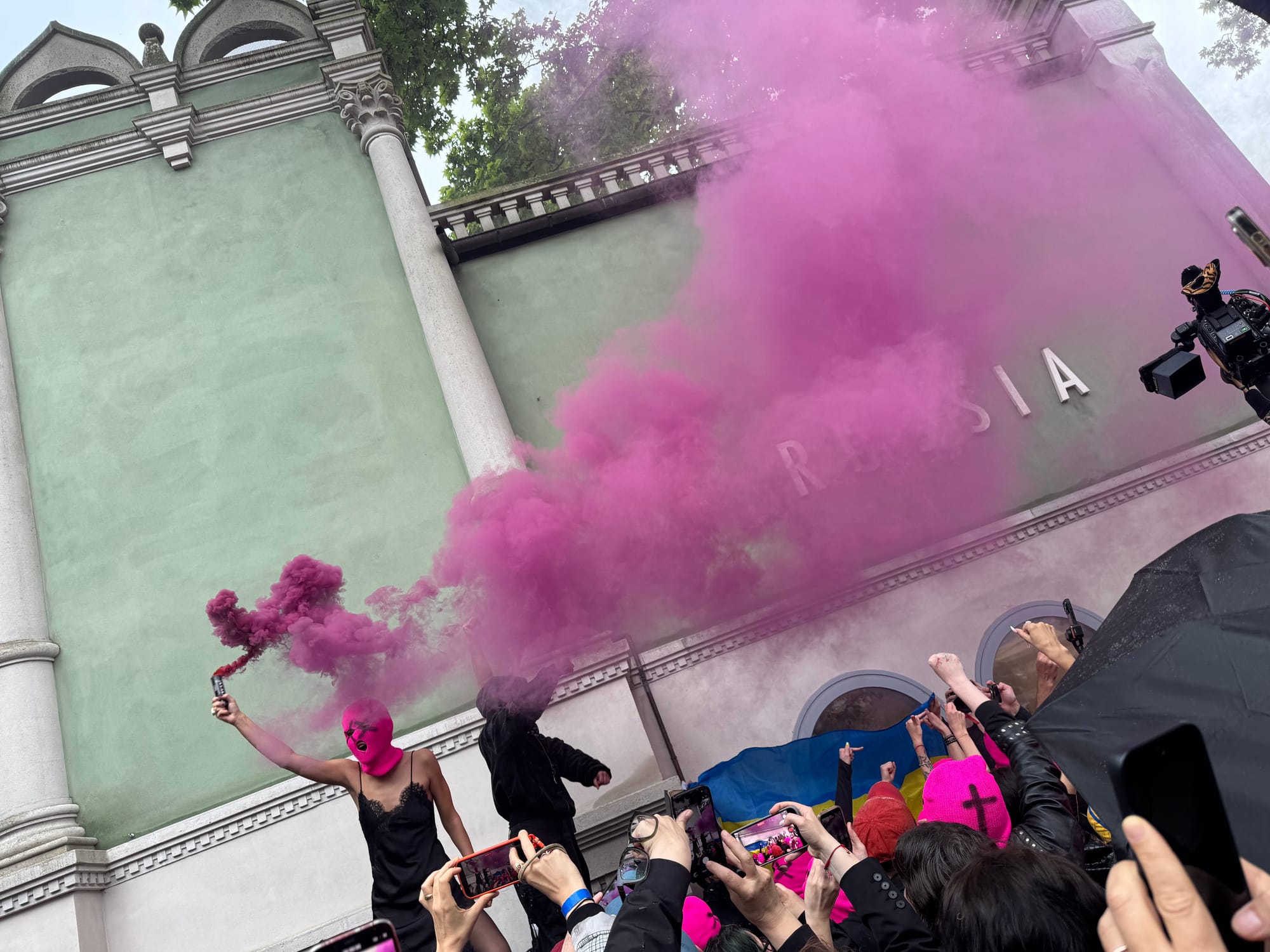
The 61st Venice Biennale preview week, opening to press and professionals ahead of its May 9 public launch, has been engulfed by protests and institutional crises. On May 5, around 60 artists from Koyo Kouoh's exhibition “In Minor Keys” staged a Solidarity Drone Chorus outside the Giardini, drawing on Gazan composer Ahmed Muin's Drone Song (2025) to highlight victims of warfare. On May 6, the Art Not Genocide Alliance (ANGA) organized protests outside Israel's pavilion at the Arsenale, leading to a security-enforced closure, while Pussy Riot and FEMEN demonstrated outside the Russian pavilion. The jury resigned on April 30 after controversy over award eligibility tied to ICC arrest warrants, prompting the Biennale to scrap Golden Lions and transfer prize voting to the public. Iran withdrew its pavilion on May 4, and Russia's will close on May 9, with only exterior video projections remaining. ANGA and Italian unions have announced a 24-hour strike on May 8.
This turmoil matters because it reflects escalating geopolitical tensions infiltrating one of the world's most prestigious art events, challenging the Biennale's role as a neutral cultural platform. The protests, boycott calls, and institutional responses—including funding withdrawal by the European Commission and legal threats from the Israeli pavilion artist—signal a crisis of legitimacy and governance in the art world, where questions of complicity, censorship, and human rights are increasingly impossible to ignore. The outcome could reshape how international biennials navigate political conflicts and artist representation.