
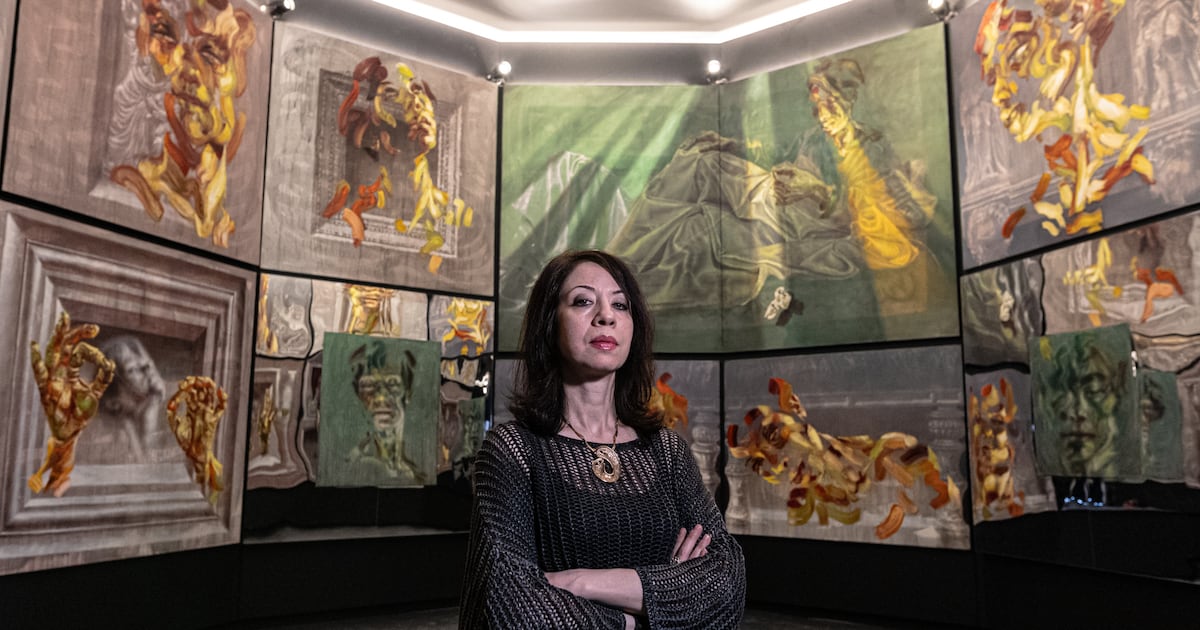
Sara Shamma, the first female artist to lead Syria's national pavilion at the Venice Biennale, presents her immersive installation *The Tower Tomb of Palmyra* at Iuav University of Venice's Cotonificio campus. The full-scale, nine-sided chamber features paintings, light, sound, and scent inspired by Palmyra's ancient funerary towers, which Shamma first encountered as a student at the National Museum of Damascus. The project, originally planned for Cambridge before the pandemic, gained new significance after the fall of the Assad government in December 2024, as Shamma returned to Damascus and was approached by Syria's Ministry of Culture to represent the country's cultural renewal on the world stage.
This exhibition matters because it marks a pivotal moment for Syria's cultural identity and restitution efforts. Shamma's pavilion is among the first official representations of the new Syria internationally, and the work explicitly calls for the return of antiquities looted during the Syrian war. By blending ancient Palmyrene funerary portraiture with contemporary sensory elements, the installation addresses cultural memory and loss, positioning art as a vehicle for national healing and global dialogue. Shamma's role as the first woman to lead the pavilion also underscores a shift toward greater inclusion in Syria's cultural diplomacy.