
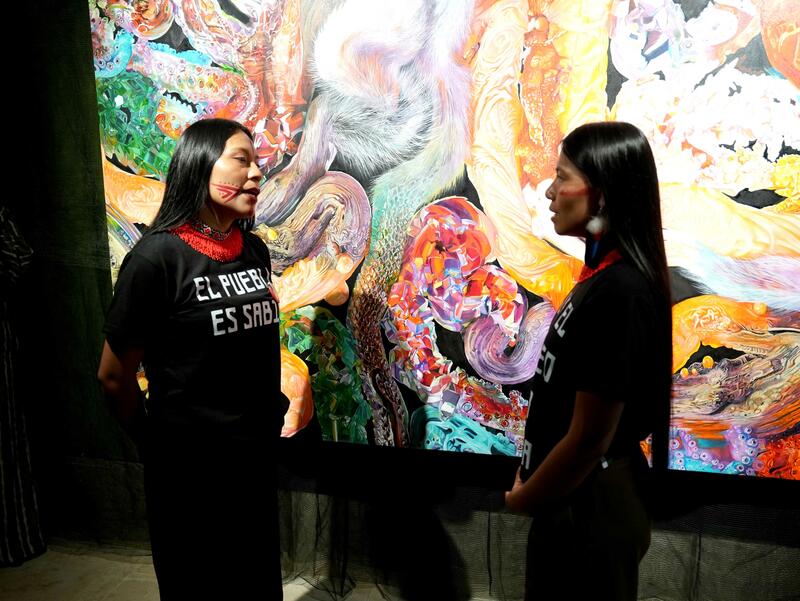
Ecuador has unveiled "Kanua: listening practices," a public program for its pavilion at the 2026 Venice Biennale, launching on May 8 with solar-powered boat tours through Venice's canals. Developed by the anticolonial film collective Tawna in collaboration with the Kara Solar Foundation and curated by Manuela Moscoso, the project features six intimate boat journeys with discussions on extractivism, aqua-feminism, and territorial resistance, involving artists such as Carolina Caycedo, Mariana Castillo Deball, and Tabita Rezaire. The initiative reactivates Tawna's floating Amazonian film festival, which originally brought cinema to remote communities in Ecuador via a solar-powered boat.
This project matters because it transforms the Venice Biennale's traditional exhibition format into a mobile, participatory dialogue that centers Indigenous and Amazonian perspectives on water, memory, and sovereignty. By using the canals as a space for conversation, Ecuador challenges institutional art-world structures and highlights environmental fragility and territorial resistance, connecting the Amazon and Venice as territories shaped by water and commerce. The pavilion, which also features artist Oscar Santillán, underscores a growing trend of biennial presentations that prioritize collaborative, decolonial practices over static displays.