
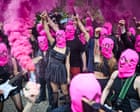
At the 2024 Venice Biennale, the Russian pavilion returned with festive performances and prosecco deliveries, drawing sharp criticism from observers who saw it as a propaganda effort to distract from Russia's war in Ukraine. Meanwhile, Ukraine's Kramatorsk was bombed, and protests erupted, including a Pussy Riot intervention. Biennale president Pietrangelo Buttafuoco defended Russia's and Israel's participation, rejecting preemptive bans despite open letters and appeals. European Commission investigated potential sanctions breaches, and culture ministers from Ukraine, Poland, Estonia, and Baltic states boycotted or condemned the biennale's stance, accusing it of yielding to the aggressor.
This matters because the Venice Biennale, as the world's most prominent art festival, has become a flashpoint for geopolitical tensions, reflecting the broader collapse of international order. The absence of the late artistic director Koyo Kouoh left a leadership void, while the jury's statement refusing to consider countries whose leaders are charged with crimes against humanity—implicitly Russia—created an ethical rift with the president's neutrality policy. The biennale's internal conflict over inclusion versus accountability underscores how art institutions are increasingly forced to navigate war, propaganda, and human rights, making this edition a pivotal moment for the art world's political conscience.