
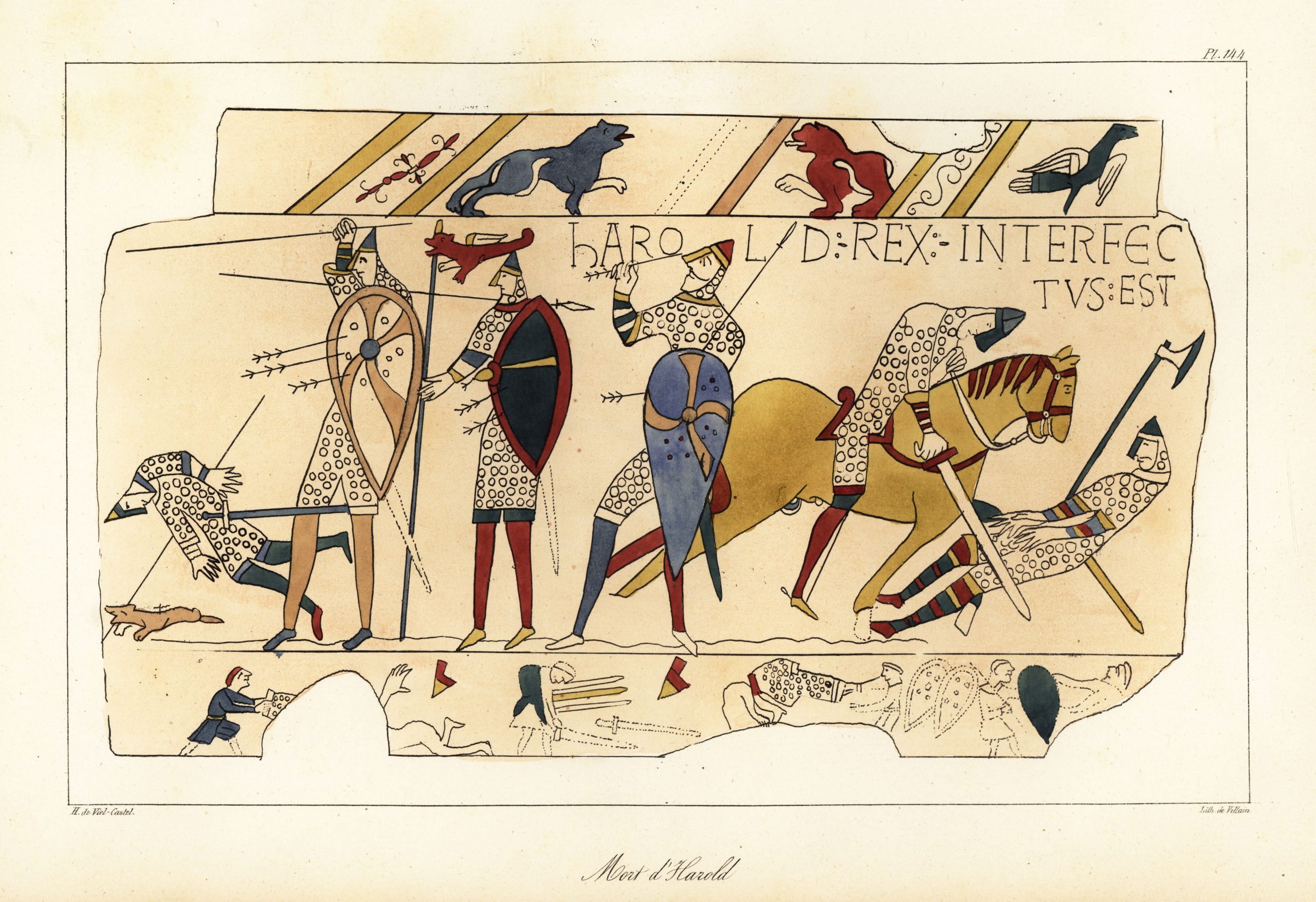
A long-lost fragment of the Bayeux Tapestry, the 11th-century embroidered chronicle of the Norman Conquest of England, has been rediscovered in the Schleswig-Holstein State Archives in Schleswig, Germany. The roughly one-inch linen piece belonged to the estate of archaeologist Karl Schlabow, who had been part of a Nazi-affiliated group that re-measured the tapestry in 1941. The fragment will be repatriated to France later this year, but first it will go on public display at the Museum of Archaeology at Gottorf Castle as part of the exhibition “Viking Twilight: Turning Point in the North” from April 16 through November 2.
The rediscovery matters because it resolves a small piece of a larger history of Nazi looting and underscores ongoing efforts to return cultural property unlawfully taken during that era. While the fragment is too small to restore the tapestry’s missing eight-by-ten-foot section, its return represents a gesture of historical justice. The episode also highlights the Bayeux Tapestry’s enduring significance as a UNESCO Memory of the World heritage asset and a key source for understanding medieval English history, especially as the tapestry is set to undergo a two-year restoration beginning in 2025.