
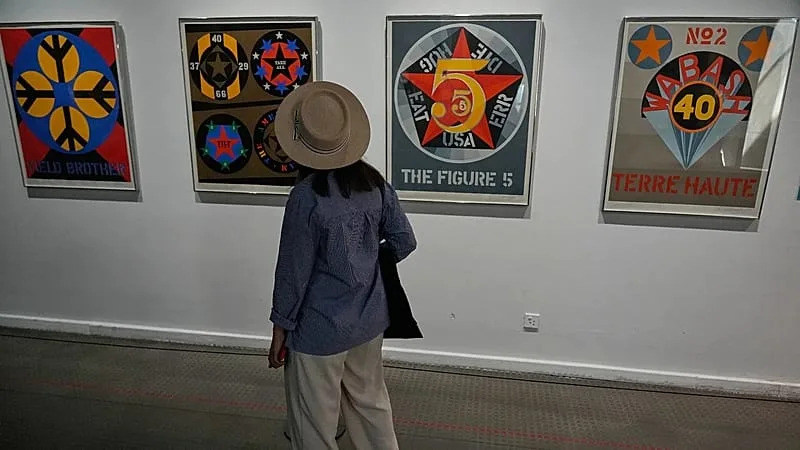
An anti-war exhibition titled "Art and War" has opened at a top museum in Tehran, featuring works by American pop artists Roy Lichtenstein, Robert Indiana, and James Rosenquist. The pieces, including Rosenquist's "F-111" and Lichtenstein's "Brattata," were selected for their anti-war themes and come from the museum's major collection of American and European modern art, acquired in the 1970s by former Empress Farah Pahlavi and largely kept from public view since the 1979 Islamic Revolution. The exhibition opened amid ongoing tensions and a recent ceasefire in the Middle East, with the museum director stating it was a deliberate response to current events.
The exhibition matters because it represents a rare public display of Western pop art in Iran, using American artists' critiques of war to resonate with local audiences during a time of conflict. It highlights the enduring power of art as a form of survival and commentary, as noted by visitors and the museum director. The show also underscores the complex cultural history of the museum's collection, which was assembled during Iran's pre-revolutionary era of close ties with the US and has been largely hidden for decades due to shifting political and religious sensitivities.