
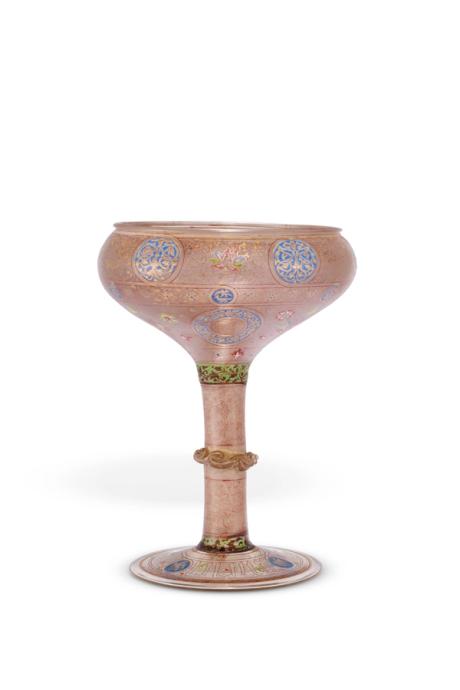
The spring Islamic and Indian art auctions in London, held at Sotheby's and Christie's in late April, achieved strong results despite geopolitical tensions. Sotheby's Arts of the Islamic World & India sales totaled £14.8m, while Christie's Art from the Islamic and Indian Worlds sale and the Mary and Cheney Cowles collection brought in £17.6m. The top lot was a rare 14th-century Mamluk gilded glass bowl from the Toledo Museum of Art, which sold for £5.5m—a new auction record for Islamic glass. Other highlights included a 17th-century Mughal astrolabe that sold for £2m at Sotheby's, setting a record for an Islamic scientific instrument, and strong sales of Iznik ceramics from two old English collections.
These results matter because they demonstrate the resilience of the Islamic and Indian art market amid ongoing regional conflict, with active bidding from new museums in the Gulf and Central Asia, including a delegation from the Islamic Civilisation Center in Tashkent. The record prices for rare objects like Mamluk glass and Mughal astrolabes underscore sustained institutional and private demand for exceptional pieces, while the success of the Iznik pottery collections highlights the enduring appeal of established collecting categories. The sales also reflect the field's ability to attract global buyers despite geopolitical uncertainty.