
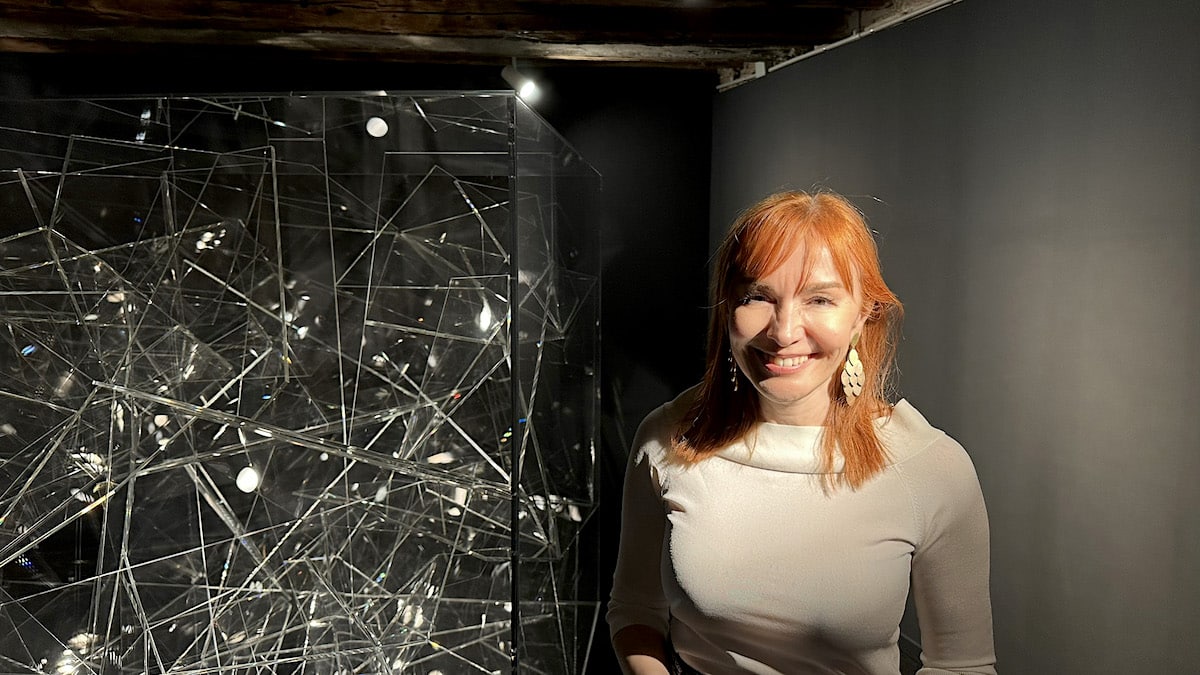
Pavlina Vagioni's exhibition *Oikeiōsis*, presented by the Hellenic Diaspora Foundation at the Venice Biennale, takes its name from a Stoic concept about recognizing belonging and expanding care outward. The show is structured in two rooms: the first, named Neikos (strife), features a fragmented plexiglass cube that reflects visitors in multiplied form, evoking separation. The second, Philotes (harmony), contains warm rock-salt seats and a layered vocal soundscape that activates the Tartini effect—a psychoacoustic phenomenon where two frequencies produce a phantom third tone, symbolizing collective kinship. The salt seats will physically change over the Biennale's six-month run, accumulating the memory of each visitor.
This exhibition matters because it directly engages with the Venice Biennale's prevailing themes of political fracture, institutional crisis, and questions of belonging. Vagioni, a Greek-born, Houston-based interdisciplinary artist and classically trained soprano, uses sound not as accompaniment but as a structural element, creating an immersive experience that makes visitors feel the concept of oikeiōsis rather than just observe it. The work's emphasis on collective resonance and material memory offers a poignant counterpoint to contemporary divisiveness, positioning Vagioni as a significant voice in the ongoing dialogue between classical philosophy and urgent present-day concerns.