
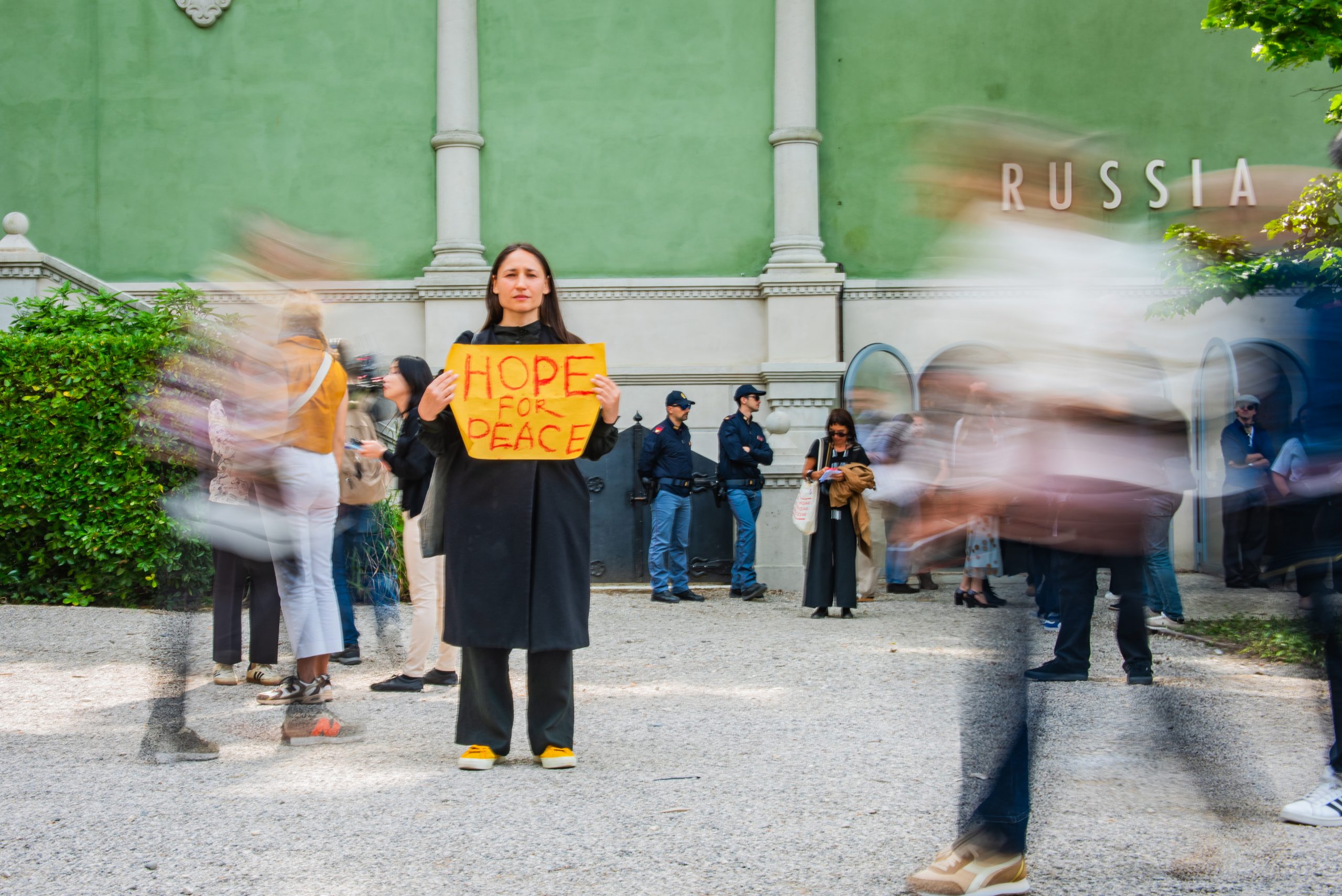
Dozens of artists participating in the 2026 Venice Biennale have withdrawn from consideration for the newly created Visitor Lion awards, replacing the traditional Gold and Silver Lion prizes. A total of 57 artists from the main exhibition and 22 national pavilions signed a statement published on e-flux on May 9, acting in solidarity with the five-person prize jury that resigned on April 30 over the continued participation of Russia and Israel. The jury had objected to awarding prizes to artists from countries whose leaders face International Criminal Court charges, including Russian president Vladimir Putin and Israeli prime minister Benjamin Netanyahu. In response, the Biennale organizers postponed the awards ceremony to November 22 and introduced visitor voting, a move they described as consistent with openness and dialogue. Meanwhile, the Russian Pavilion, which returned after lending its space to Bolivia in 2024, faced protests, closure after previews, and a €2 million funding pull by the European Union for the 2028 Biennale.
This controversy matters because it underscores the growing politicization of the world's most prestigious art exhibition, where geopolitical conflicts over Russia's invasion of Ukraine and the Israel-Hamas war have directly disrupted the Biennale's operations and prize system. The mass withdrawal of artists and the jury's resignation signal a deep rift between institutional leadership and the artistic community over ethical stances on state participation. The shift to visitor voting for awards challenges traditional curatorial authority, while the EU's funding withdrawal and Italian government officials' boycotts highlight how art events have become arenas for international political leverage. The outcome could set a precedent for how major biennials handle contested national pavilions and prize integrity in the future.