
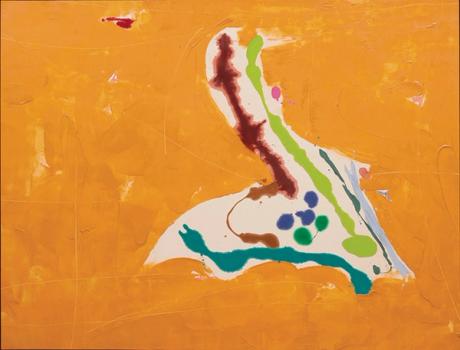
The Milton Resnick and Pat Passlof Foundation in New York is hosting the exhibition "How Asian Is It?", featuring 12 pioneering East Asian American abstractionists born between 1928 and 1955. Curated by Lilly Wei, the show includes works by Barbara Takenaga, Emily Cheng, Charles Yuen, and David Diao, among others. These artists navigated an art world where downplaying their Asian identities often felt necessary for survival, especially after the 1965 Immigration and Nationality Act reshaped US immigration policy. The exhibition explores how their abstraction—marked by attention to interval, pause, and what remains unsaid—reflects a disciplined negotiation with space rather than a shared style or manifesto.
This exhibition matters because it challenges the long-held assumption that Asian American artists must make their identities invisible to succeed in the art world. By foregrounding artists who began their careers when identity could feel like a liability, the show redefines what it means to be an Asian American artist and questions the very categories of identity and abstraction. It invites viewers to consider how cultural principles like liubai (the Chinese ink painting concept of active white space) subtly inform these works, and how history quietly sits in the space between visibility and restraint. The exhibition thus contributes to broader conversations about diversity, assimilation, and the politics of representation in American art.