
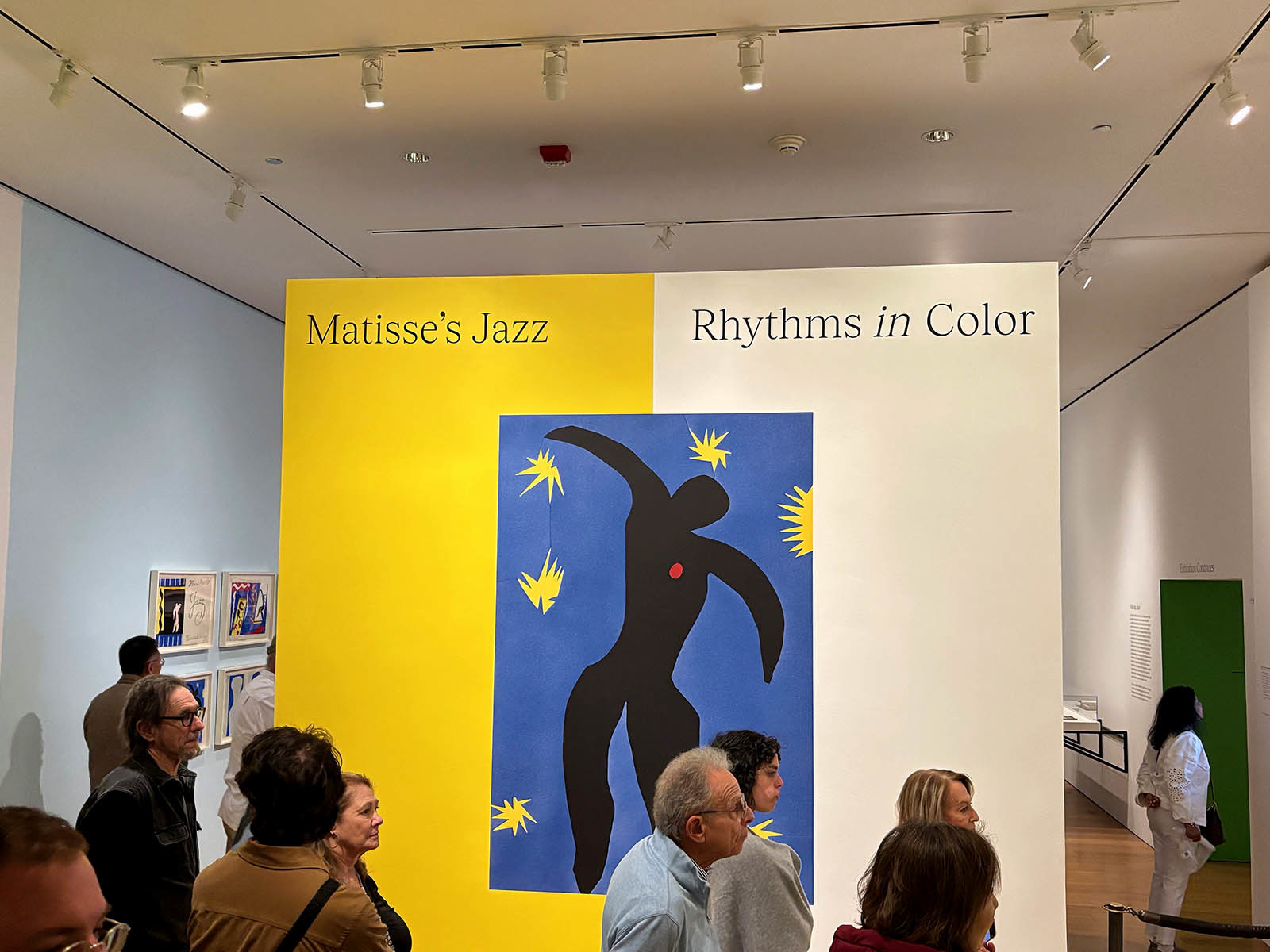
The Art Institute of Chicago is currently hosting "Matisse's Jazz: Rhythms in Color," an exhibition centered on Henri Matisse's 1947 artist's book "Jazz." The show, on view until June 1, features the iconic cut-paper works Matisse created after a 1941 surgery left him unable to paint. Visitors enter directly into the "Jazz" gallery before backtracking through earlier works, offering a chronological journey that culminates in the cut-paper technique. Wait times can exceed 90 minutes, but the museum recommends joining a virtual queue and exploring other galleries in the meantime.
The exhibition matters because it reframes "Jazz" not merely as a beloved, ubiquitous cultural icon—seen on postcards and dorm-room posters—but as a deeply personal and politically charged work. Created during the Nazi occupation of France, the vibrant colors and abstract forms camouflage Matisse's anxiety and references to violence, including the Gestapo and his wife and daughter's arrests for Resistance activities. The show highlights Matisse's resilience and innovation, demonstrating how he reinvented his practice in his final years, making it a testament to artistic endurance under duress.