
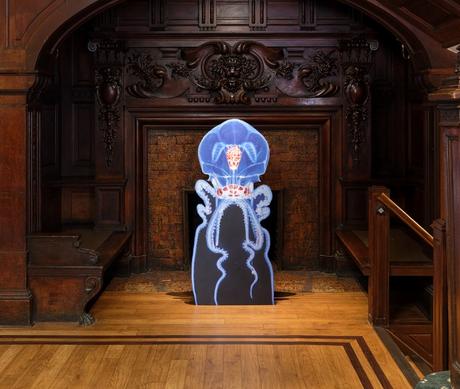
The Esther art fair, a satellite of Frieze New York, opened its third and final iteration at Estonian House on East 34th Street. Founded by Estonian gallerists Olga Temnikova and Margot Samel, the fair eschews conventional stands, instead arranging 22 participating galleries and three bespoke projects throughout the historic Beaux-Arts building’s basement, salons, and upper floors. Highlights include sold-out presentations at Adams and Ollman and Management, works by Katja Novitskova, Jill Goldstein, and Elīna Vītola, and a special project by Darja Popolitova and Madlen Hirtentreu turning beauty-industry equipment into installations. Gallerists praised the cooperative atmosphere, contrasting it with larger, more institutionalized fairs.
This fair matters because it represents a deliberate, small-scale alternative to the dominant art fair model, emphasizing collaboration over competition and showcasing emerging and underrepresented artists from Estonia, Latvia, Hungary, and beyond. Its closure after three years—marked by a commemorative plaque—raises questions about the sustainability of such independent initiatives amid a shifting American art market, geopolitical tensions in Eastern Europe, and reduced international travel. The fair’s success in selling out presentations and attracting influential collectors demonstrates that there is still appetite for intimate, curatorially driven fairs that prioritize community and discovery over scale.