
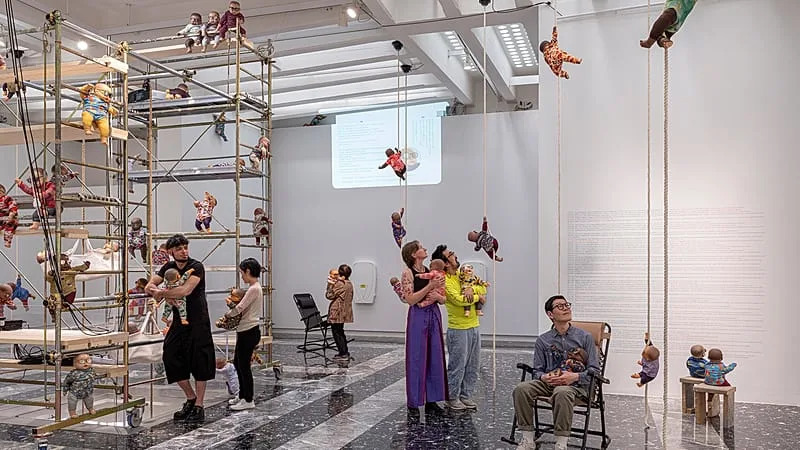
The 61st Venice Biennale, themed 'In Minor Keys' by late curator Koyo Kouoh, has been marked by political protests against Russia and Israel's participation, pavilion closures, and threats to funding. Despite this tense atmosphere, several national pavilions quietly embody Kouoh's vision of nurture, intimacy, and reflection. Highlights include the Japan Pavilion's 'Grass Babies, Moon Babies' by Ei Arakawa-Nash, where visitors carry and care for baby dolls, and the Polish Pavilion's 'Liquid Tongues' by Bogna Burska and Daniel Kotowski, an immersive sound installation exploring Deaf culture and marginalized communication.
This year's Biennale matters because it demonstrates how art can offer a counterpoint to global political turmoil by focusing on sensory, emotional, and communal experiences. The pavilions that align with Kouoh's theme—emphasizing care, sound, and alternative ways of knowing—may prove more enduring than the political stunts, suggesting a shift toward art that prioritizes human connection and vulnerability over spectacle. The event also highlights ongoing debates about inclusion and protest within major international exhibitions.