
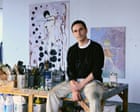
Russian-born, New York-based artist Sanya Kantarovsky presents his new exhibition "Basic Failure" at Venice's Institute of Sciences, Letters and Arts, timed to coincide with the Venice Biennale. The show features his signature dishevelled, otherworldly figures—including a pallid boy with a cigarette, a child spinning in innocence, and a glass bust of a young boy with a dead spider under its eye—that explore tension, alienation, and the supernatural. Kantarovsky describes his process as listening to the painting like a Ouija board, and the exhibition includes works that confound narrative expectations, such as a scruffy toy panda and a recreation of Antonello Gagini's 16th-century sculpture.
This article matters because it profiles a rising contemporary painter whose work has gained international prominence through major exhibitions in Turin, Zurich, and Tokyo, and who is now showing in Venice during one of the art world's most important events. Kantarovsky's exploration of memory, homesickness, and the 'ordinary' through a supernatural lens reflects broader trends in figurative painting that engage with psychological depth and cultural displacement. His ability to blend dark humor with references to Picasso, de Chirico, and Milton Avery positions him as a significant voice in contemporary art, while his commentary on 'what's allowed to be shown' speaks to ongoing debates about artistic boundaries.