
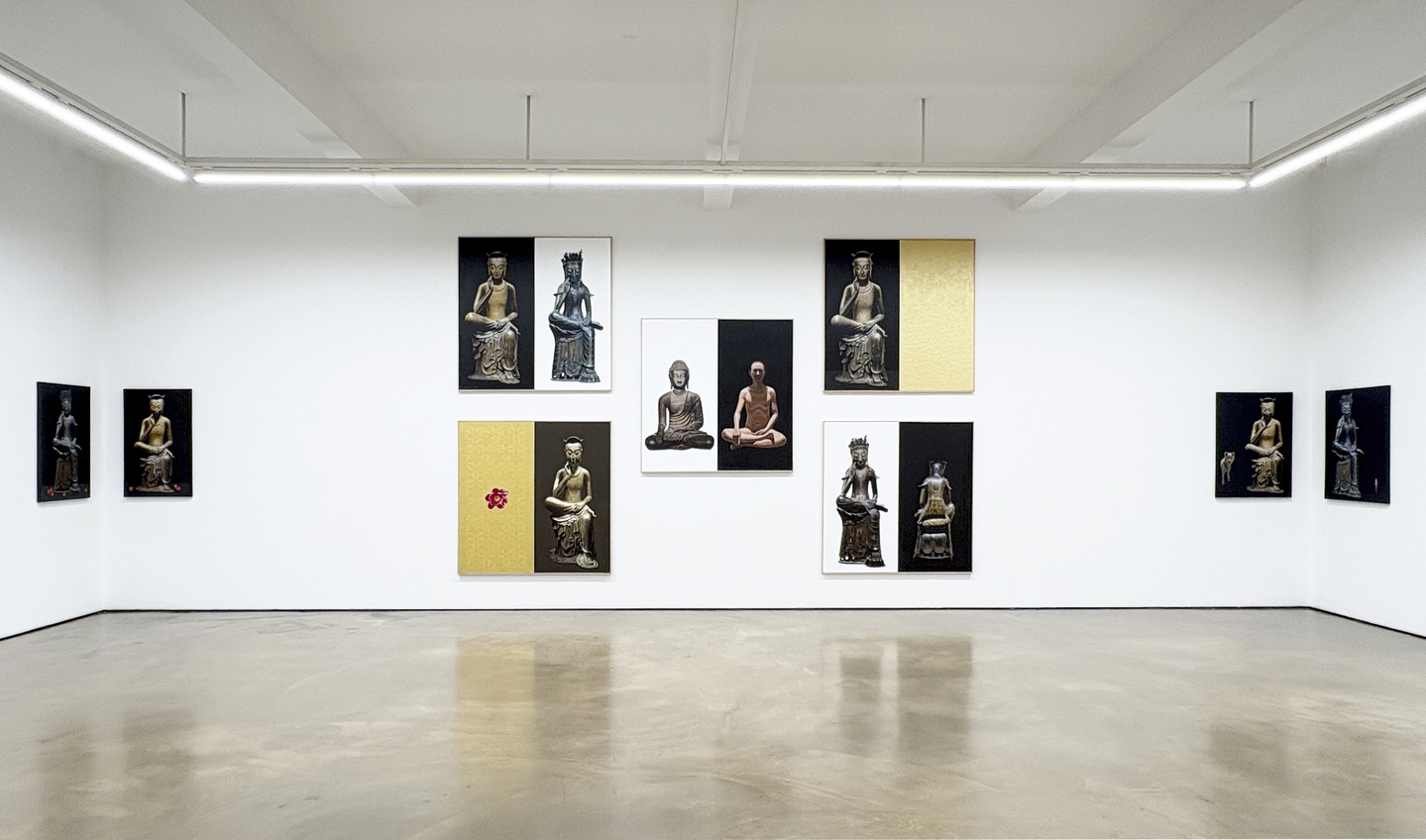
Veteran Korean artist Lee Jong-gu, a key figure in the 1980s minjung art movement, has opened a solo exhibition titled "Pensive" at Hakgojae Gallery in Seoul. The show features 38 paintings that mark a shift from his decades-long focus on social realism toward a more contemplative approach, centering on the bangasayusang (contemplative bodhisattva figures) from the National Museum of Korea. Lee blends these sacred images with nude bodies, flames, and crowd scenes, drawing on the Buddhist concept of non-duality to explore themes of life, death, and the sacred versus the profane. The exhibition runs through June 20.
This exhibition matters because it represents a significant evolution in the work of a major Korean artist who rose to prominence painting portraits of farmers on government-issued rice sacks during the authoritarian era. Lee's turn toward introspection, influenced by the Covid-19 pandemic, his recent illness, retirement from academia, and walks through Jirisan trails, signals a broader shift in politically engaged art from confrontation to contemplation. The show also demonstrates how veteran artists can reinvent themselves while maintaining their political grounding, as seen in the work "Pensive_Yeto (Palestine)" (2025), which addresses the war in Gaza through a Buddhist lens.