
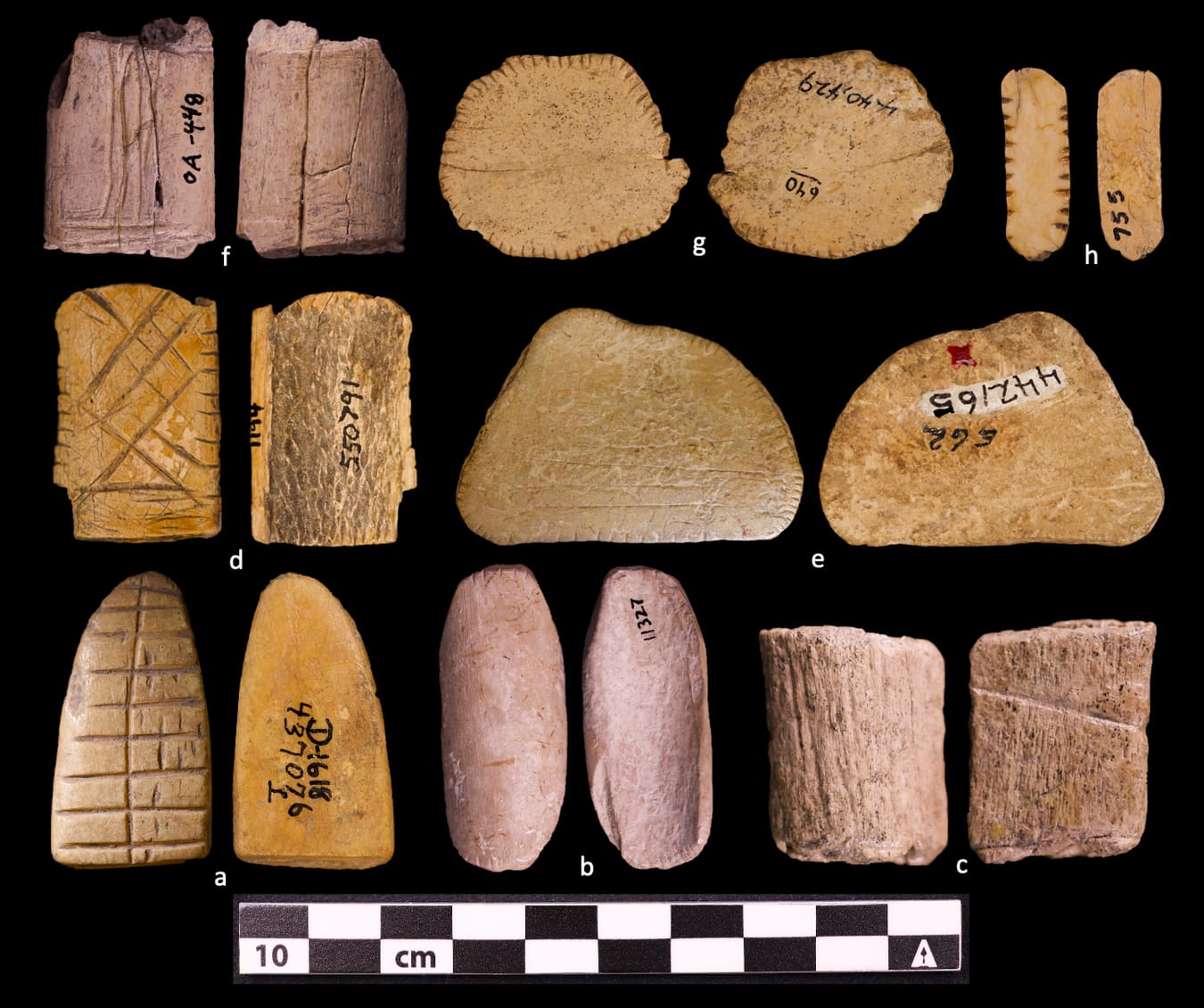
Archaeologist Robert J. Madden has published a groundbreaking study in the journal American Antiquity identifying over 600 prehistoric objects as two-sided dice. These artifacts, found across 57 sites in the American West, date back more than 12,000 years to the Late Pleistocene era. By applying criteria from historic Native American gaming traditions to these bone and wood fragments, Madden argues that dice-based games of chance existed 6,000 years earlier than previously recorded in the archaeological record.
This discovery challenges long-held assumptions about the intellectual complexity of Ice Age societies, suggesting that early Native Americans engaged with sophisticated concepts of probability and randomness. Beyond their function as tools for gaming, these "binary lots" featured decorative markings that indicate an early intersection of artistic impulse and social engineering. Madden posits that these games served as vital neutral spaces for cultural exchange and conflict resolution between different tribes, using the fairness of chance to facilitate social cohesion.