
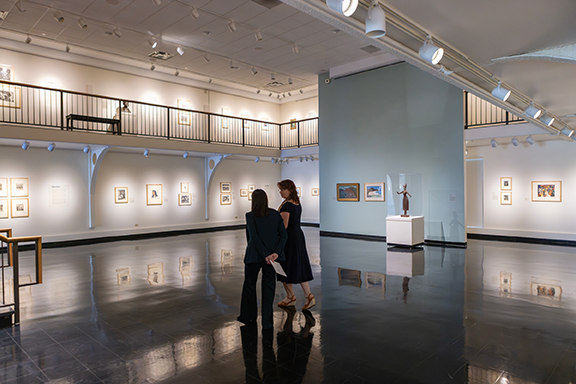
The article introduces the Binghamton University Art Museum, located in the Fine Arts Building on campus, highlighting its role as a dynamic public space since its founding in 1967. It details the museum's permanent collection of over 5,000 objects spanning classical antiquity to contemporary works, along with its student-intern program that allows undergraduates to curate exhibitions and work in various museum departments. Four specific highlights are featured: the Kenneth C. Lindsay Study Room, sculptor Ed Wilson, Henry Moore's bronze "Reclining Figure on Pedestal," and a mysterious 17th-century Nuvolone painting cut into six pieces and reassembled.
This article matters because it showcases how a university art museum serves as both an educational resource and a cultural hub, fostering interdisciplinary collaboration and hands-on learning for students. The inclusion of works by notable artists like Henry Moore and the intriguing provenance story of the Nuvolone painting—linked to a Nazi-era escape—underscores the museum's role in preserving and interpreting art with historical significance, making it relevant to broader discussions of art restitution and academic engagement.