
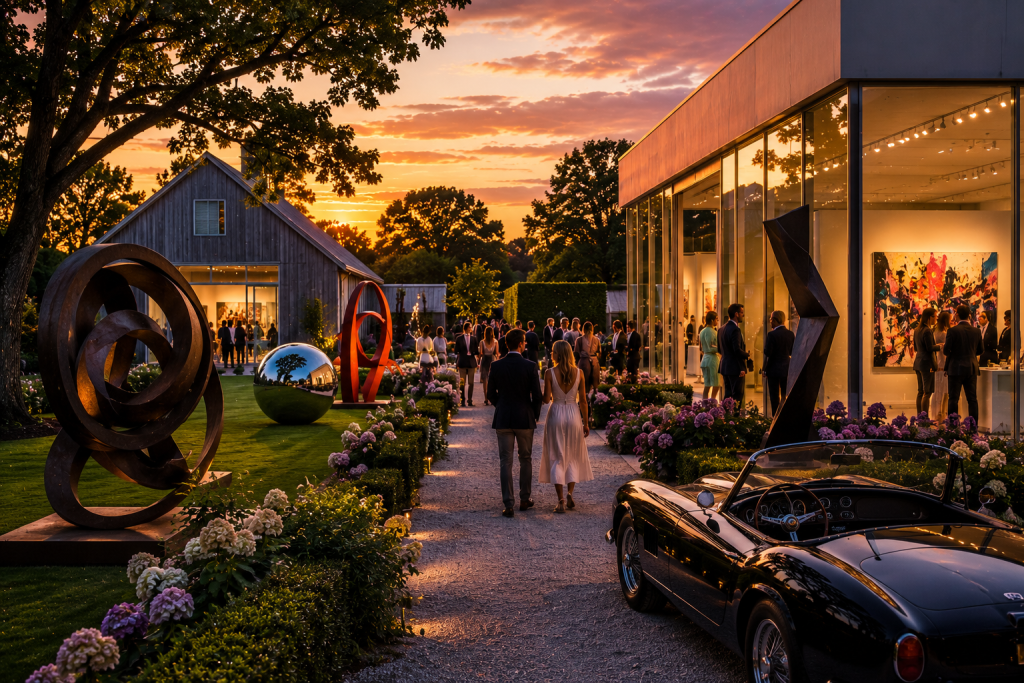
The article surveys the art scene in Bridgehampton, New York, focusing on Dia Bridgehampton (formerly the Dan Flavin Art Institute) and six commercial galleries on Main Street. Dia Bridgehampton, housed in a converted 1909 firehouse that later served as an African American Baptist church, features nine permanent fluorescent light installations by Dan Flavin (1963–1981) and a rotating gallery showcasing artists who live or work on Long Island. The village also hosts galleries including Mark Borghi Fine Art and The White Room Gallery, creating a dense concentration of art venues within four blocks.
This matters because Bridgehampton exemplifies how a small hamlet can sustain a vibrant art ecosystem through a mix of a major institutional anchor—Dia, with its free, quiet, and historically layered space—and commercial galleries catering to wealthy seasonal collectors. The article highlights the symbiotic relationship between artists, collectors, and galleries on the East End, and underscores the importance of context and place in experiencing art, particularly at Dia Bridgehampton, where Flavin's work is displayed in the building he personally selected.