
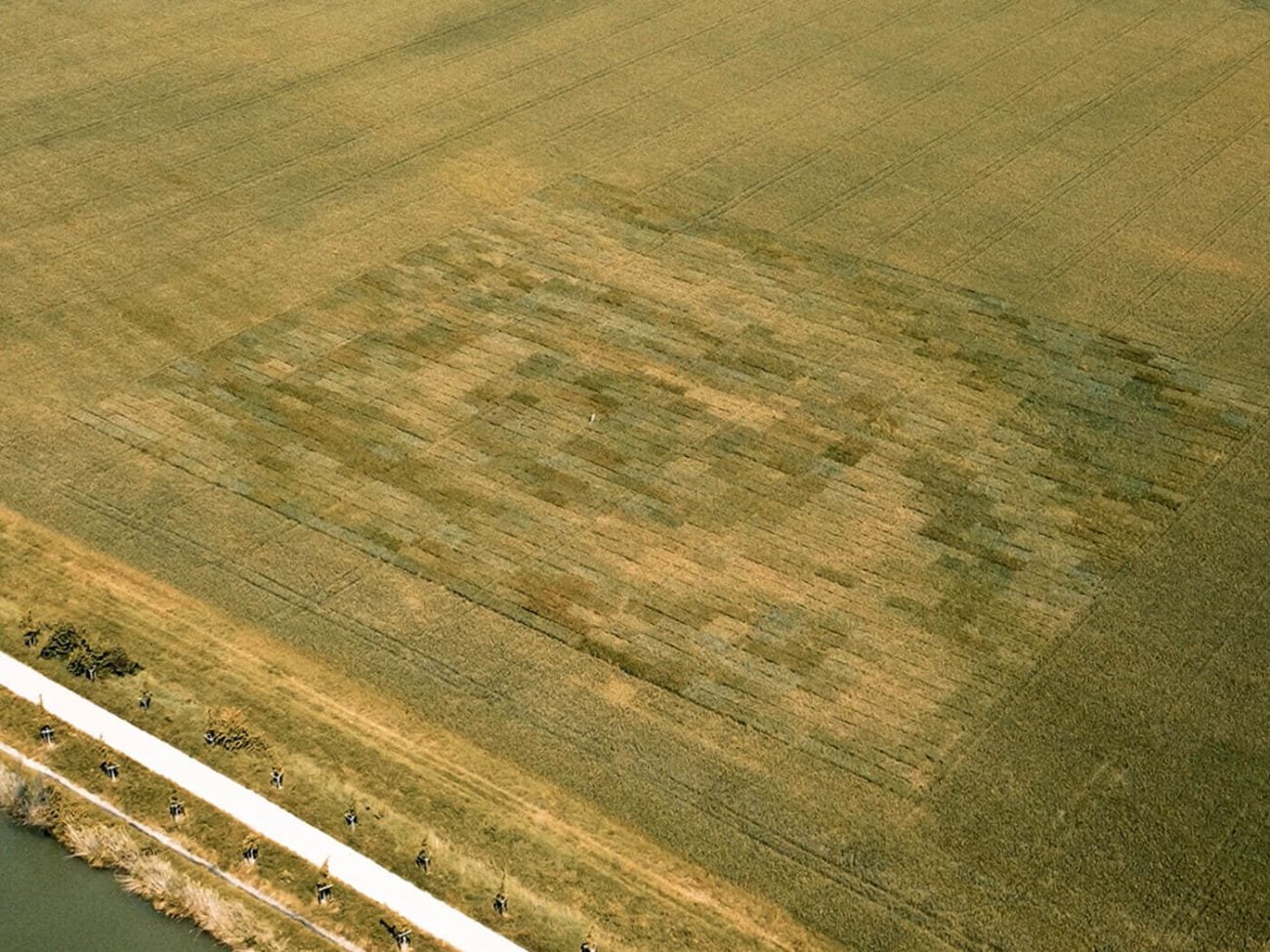
Anglo-Spanish photographer Almudena Romero has created "Farming Photographs," a 11,000-square-meter photographic work in a field near Toulouse, France, making it the largest photograph ever made. Using the 19th-century anthotype process, the image—a giant eye composed of traits from various races, genders, and ages—was planted as a crop of wheat and winter grasses, with each pixel corresponding to a tractor-width plot. The work emerges in spring, is visible from May to June, transforms until harvest, and ultimately becomes edible flour. Romero collaborated with France's INRAE agricultural research institute, dividing the image into 1,350 pixels and assigning different plant varieties to each based on color and density.
This project matters because it redefines photography as a living, ecological medium that grows with rather than imposes on nature. By using photosynthesis and plant pigments instead of chemicals, Romero challenges conventional notions of image-making and sustainability. The work also highlights the vulnerability of agriculture to climate change, as an unusually wet winter nearly prevented its realization. As the largest photograph ever made and one of the most environmentally conscious, "Farming Photographs" pushes the boundaries of both scale and medium, merging art, agriculture, and environmental awareness in a single, ephemeral field.