
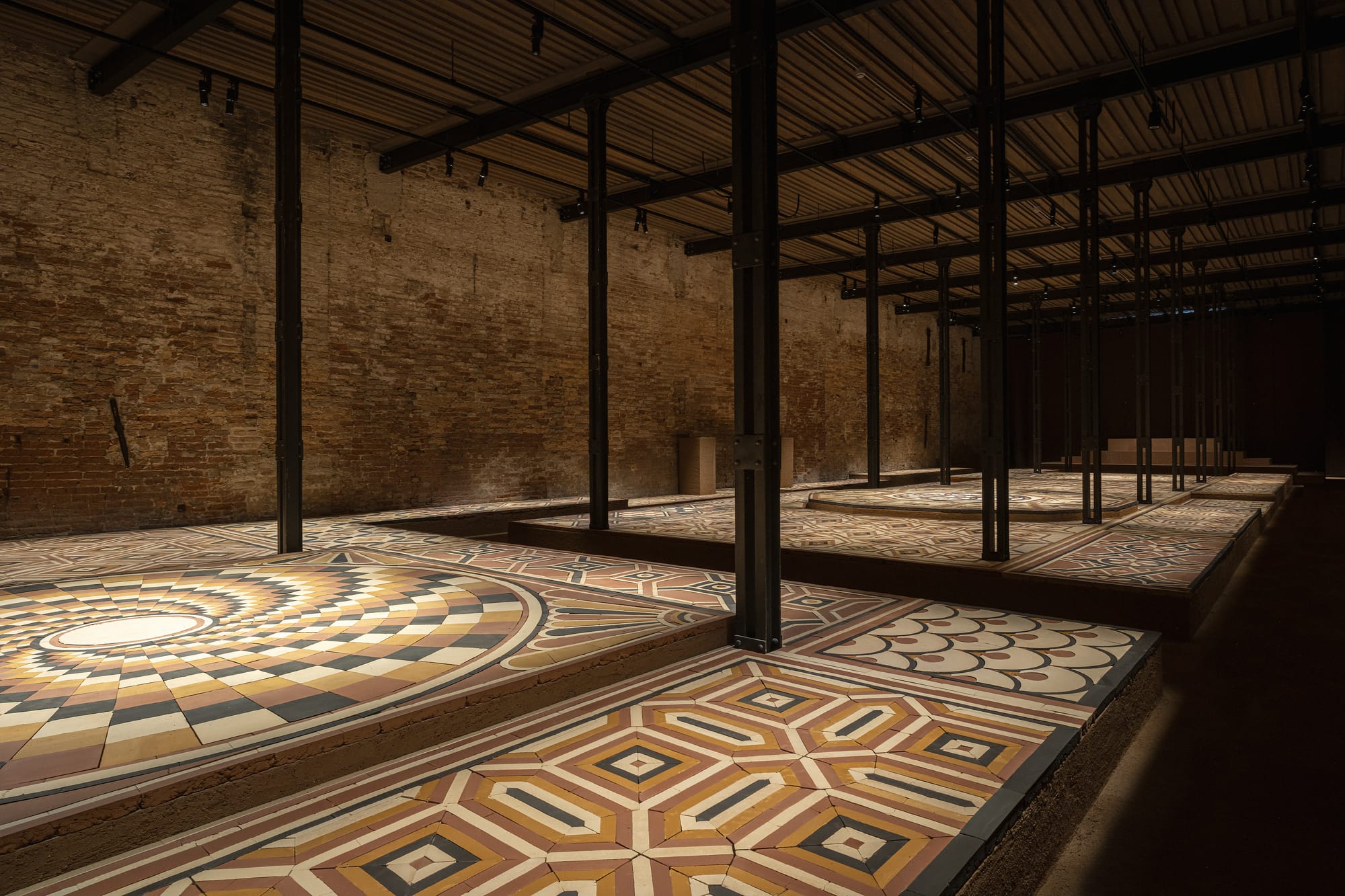
At the 2026 Venice Biennale, West Asian artists and national pavilions presented powerful works addressing political strife, cultural heritage, and identity. Highlights include Dana Awartani's mosaic installation at the Saudi pavilion evoking destroyed heritage sites, the UAE pavilion's sonic exhibition "Washwasha" curated by Bana Kattan, and debut pavilions from Morocco, Oman, and Qatar. The Lebanese pavilion featured Nabil Nahas's geometric frieze, while Qatar's pavilion offered multisensory elements by Rirkrit Tiravanija, Alia Farid, Sophia Al-Maria, and Tarek Atoui.
This coverage matters because it documents how artists from conflict-affected regions use the global platform of the Venice Biennale to bear witness to destruction, preserve cultural memory, and assert their presence. The debut pavilions signal growing international recognition of West Asian contemporary art, while the integration of poetry, sound, and collaboration with artisans reflects evolving curatorial strategies that challenge traditional exhibition formats.