
Was kommt nach dem Edelkitsch?
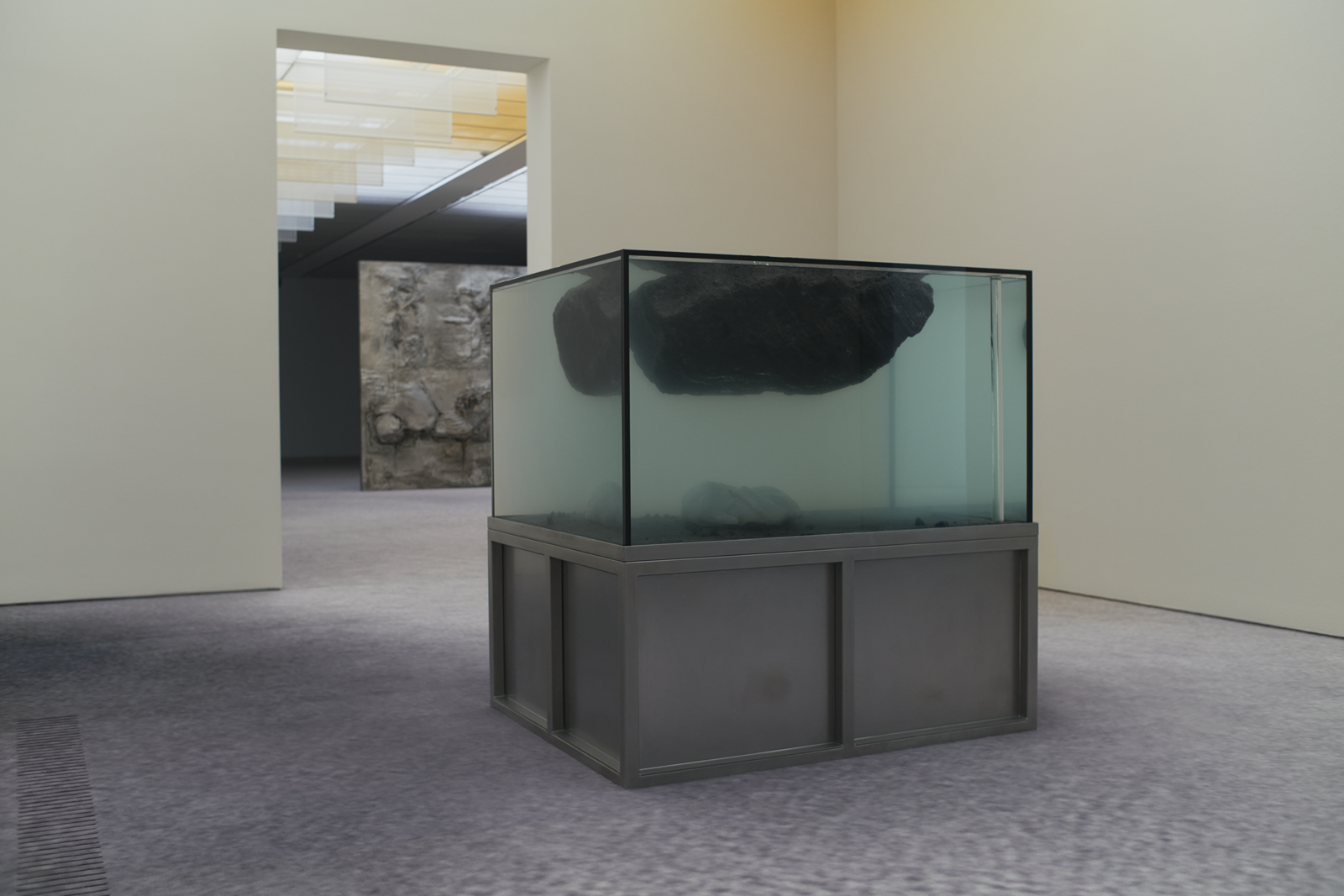
Pierre Huyghe, whose recent Berlin exhibition of "Liminals" at Berghain was harshly criticized as "Edelkitsch" (luxury kitsch), opens a comprehensive survey at the Fondation Beyeler near Basel. The show features new works including ants emerging from a wall, a blind pale worm-like robot, and an artificial breathing organ called "Apnea" in a sand-floored aquarium, all exploring the blurred boundaries between biological life and intelligent technology. A film work, "Camata," uses AI to continuously re-edit footage of machines circling a human skeleton in Chile's Atacama Desert, while other pieces reference post-apocalyptic landscapes and Fukushima's exclusion zone.
This exhibition matters because it represents a major European institutional response to Huyghe's ambitious but controversial practice, which pushes the limits of how art can engage with artificial intelligence, ecology, and speculative futures. The Fondation Beyeler's decision to mount a full-scale survey signals continued institutional confidence in Huyghe's work despite critical backlash, and the show itself raises urgent philosophical questions about what deserves care and attention in an age of intelligent machines and environmental collapse.