
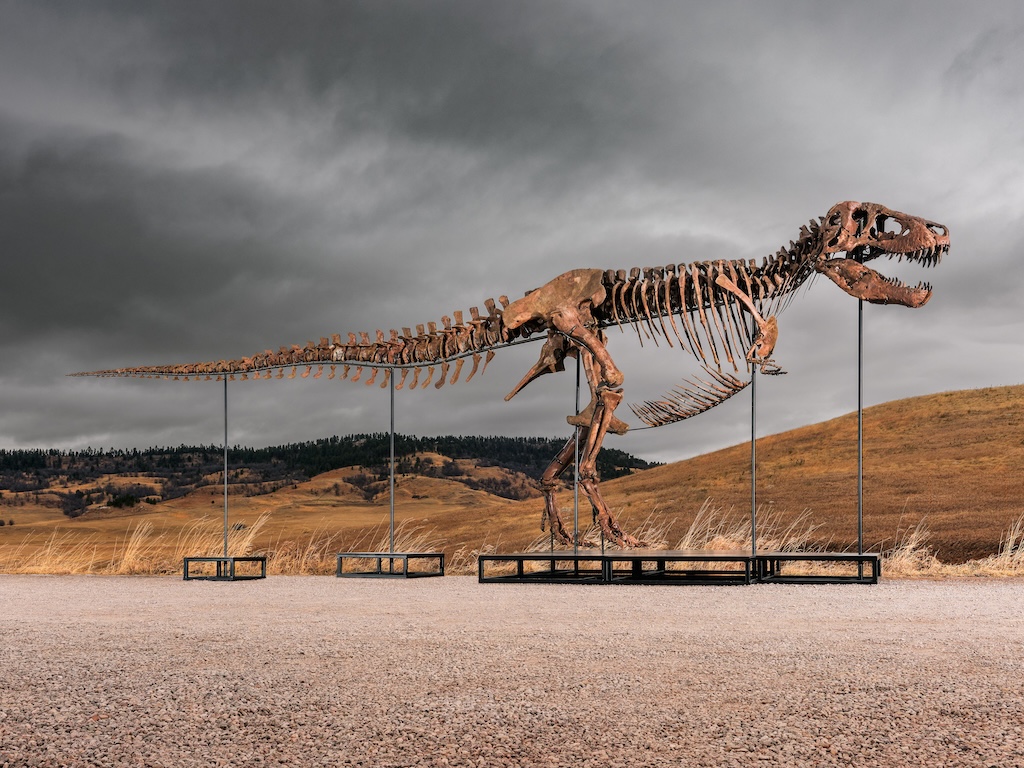
Sotheby's is set to auction 'Gus,' a 67-million-year-old Tyrannosaurus rex skeleton estimated at $20–$30 million, the highest estimate ever placed on a dinosaur fossil. The specimen, excavated in South Dakota, is one of the largest and most complete T. rex skeletons discovered. The auction follows a growing trend of dinosaurs appearing not only at major auction houses like Sotheby's and Christie's but also in contemporary art galleries and private museums, such as Amanita's recent exhibition pairing Maiasaura fossils with a John Chamberlain sculpture.
This shift matters because it signals that dinosaurs are becoming the ultimate trophy objects for ultra-wealthy collectors, who have already acquired top-tier Picassos, Rothkos, and Patek Philippe watches. As Mari-Claudia Jiménez of Withers Art and Advisory notes, these collectors now seek the best of other collectibles, with dinosaurs representing a new frontier. The trend blurs the line between natural history and luxury art, raising questions about the commodification of scientific specimens and the role of spectacle in the art market.