
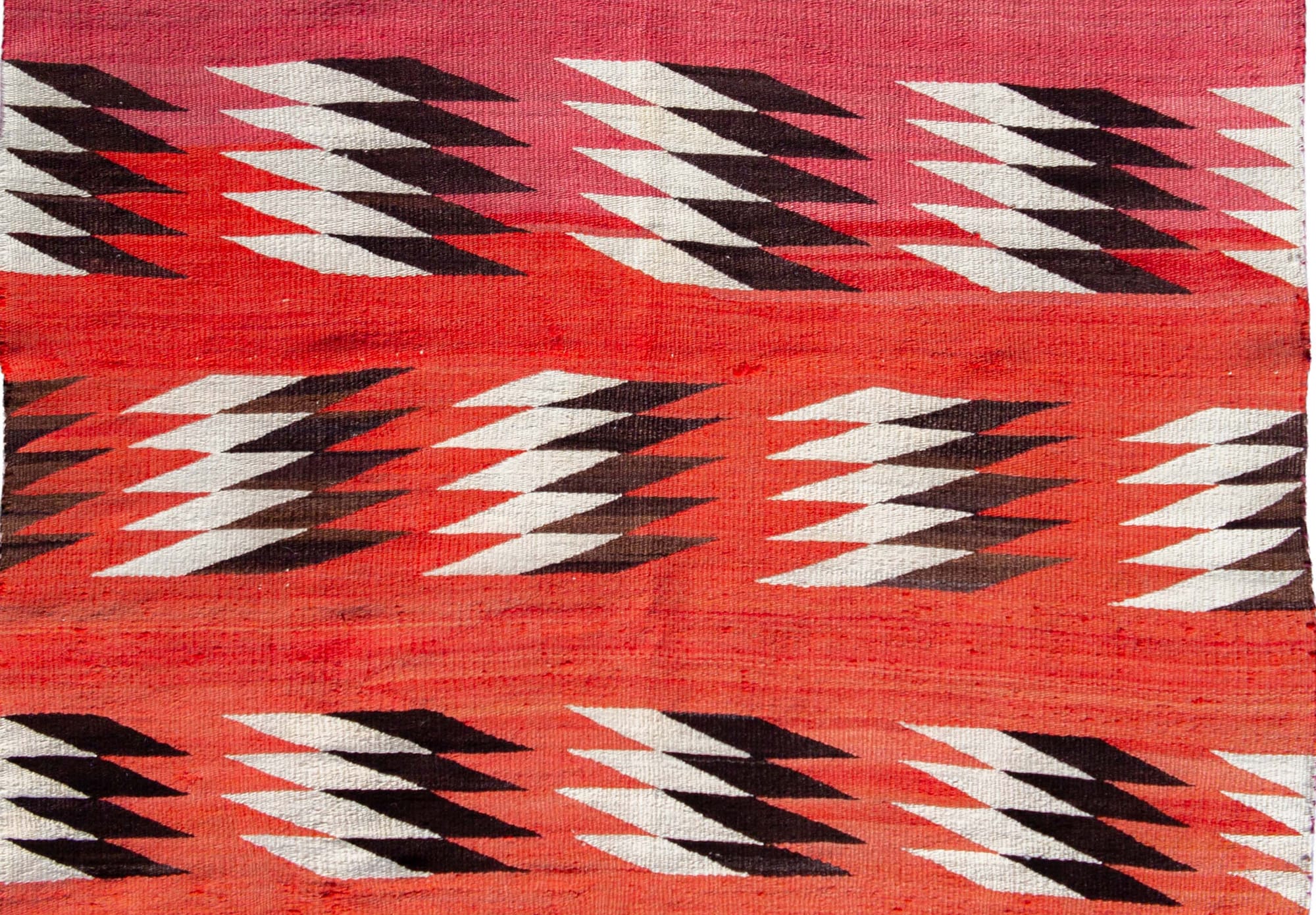
The late abstract artist Frank Stella's collection of 40 Diné (Navajo) textiles, assembled over decades, is on public display for the first time at Arader Galleries in New York City through June 10. Organized by rug expert Peter Pap, the exhibition also includes a selection of Stella's early geometric drawings, highlighting the connection between Diné weaving and his visual language. The textiles, mostly from the Transitional Period (c. 1880–1910), were chosen by Stella for their bold colors and geometric patterns rather than traditional scholarly benchmarks. The collection will also be shown at Pap's store in Dublin, New Hampshire, later this summer, ahead of its sale.
This exhibition matters because it reframes Diné textiles as fine art rather than anthropological artifacts, aligning with Stella's own artistic sensibilities. New research by scholar Jill Ahlberg Yohe underscores how Stella's collection challenges conventional Navajo textile scholarship, which has historically prioritized cultural generalization over individual creative innovation. By displaying these weavings alongside Stella's drawings, the show illuminates a cross-cultural dialogue between Indigenous artistry and modernist abstraction, while also offering a rare public glimpse into a private collection that the artist kept largely to himself, even wrapping himself in one of the textiles at home.