
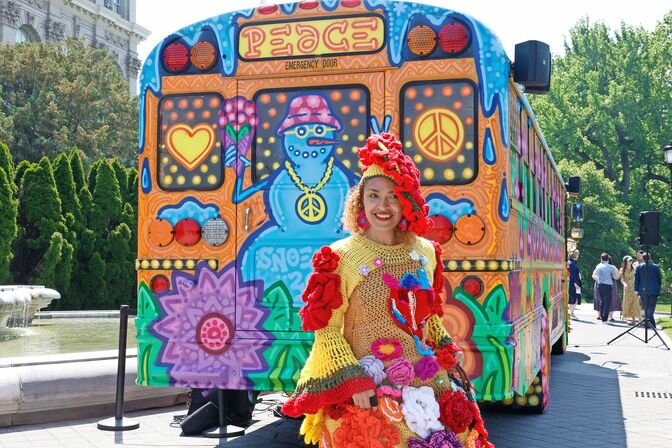
The New York Botanical Garden has opened a new exhibition titled “Flower Power,” which explores the intersection of contemporary art, horticulture, and the social history of the 1960s anti-war movement. The show begins in the Mertz Library Building’s Art Gallery with historical artifacts like first-edition feminist texts, then extends across the garden grounds with outdoor installations by seven artists, including Carlos W. Encarnación’s painted van and Carmen Paulino’s crocheted flowers. The exhibition traces the phrase “flower power” back to Beat poet Allen Ginsberg, who proposed using flowers as a visual language for peace protests during the Vietnam War era.
This exhibition matters because it reframes a well-known cultural symbol—the flower—as a serious vehicle for political activism and social change, connecting the counterculture movement of the 1960s to contemporary artistic practice. By blending historical artifacts, immersive art installations, and botanical displays, the New York Botanical Garden creates a multidisciplinary experience that challenges visitors to reconsider the power of visual symbols in protest and the enduring relevance of nonviolent activism. The show also highlights how artists from diverse backgrounds, including Puerto Rican and fiber artists, continue to use floral imagery to address issues of identity, community, and resistance.