
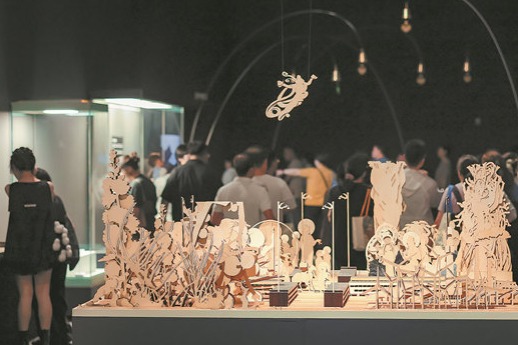
The Dunhuang Contemporary Art Museum in Shanghai has opened a new exhibition titled "How Long Is the Silk Road?" running until October 31. The show brings together 65 ancient cultural relics excavated along the Silk Road—dating from the Warring States Period to the Tang Dynasty—alongside 26 newly created artworks by contemporary Chinese and international artists who participated in a residency program in Dunhuang, Gansu province. Organized with the Gansu Jiandu Museum and supported by several local museums and China Daily Culture Channel, the exhibition is arranged in five chapters exploring themes of distance, journey, and cultural exchange. Highlights include Han Dynasty wooden and bamboo slips (jiandu) recording courier station distances, a hemp sandal displayed beside a painting of the monk Xuanzang, and works by artists like Guo Hongwei, who studied ancient pigment-making techniques in the nearby mountains.
The exhibition matters because it re-examines the historical Silk Road not as a static trade route but as a living conduit of cultural exchange, using the juxtaposition of ancient artifacts and contemporary art to make history tangible for modern audiences. By connecting the UNESCO-listed Mogao Caves—the world's largest treasure house of Buddhist art—with today's artistic practices, the show underscores the enduring relevance of cross-cultural dialogue and the continuous evolution of ancient civilizations in a contemporary context. It also highlights the growing trend in China of using museum partnerships and artist residencies to bridge heritage preservation with contemporary creativity.