
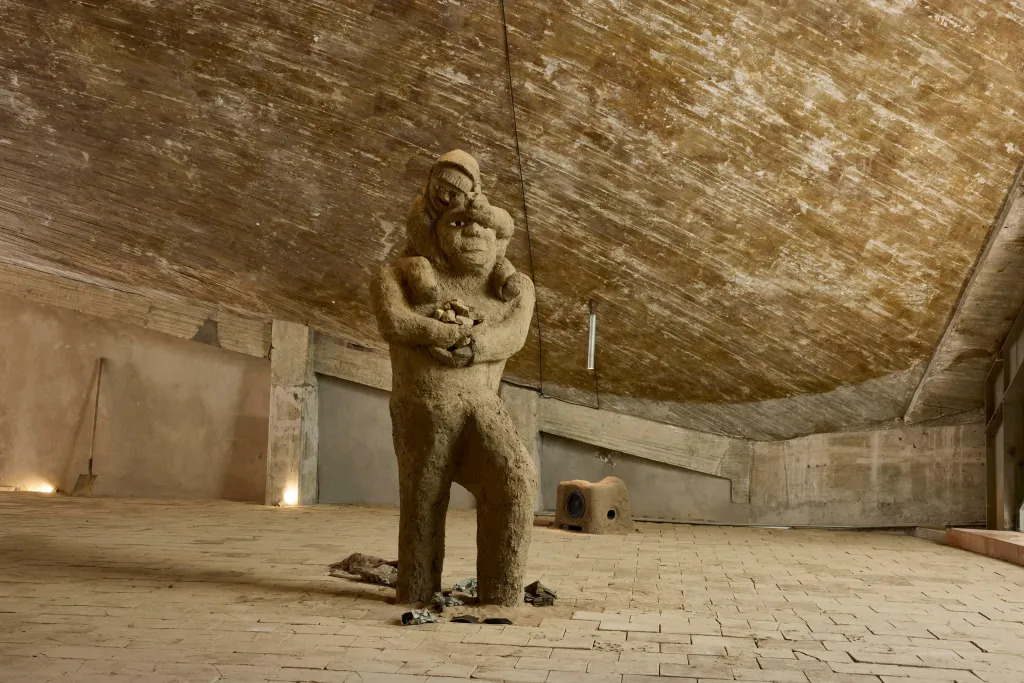
During the first half of 2026, Chicanx artist rafa esparza (Los Angeles, 1981) presented two concurrent exhibitions in Mexico City—"juntxs" at LagoAlgo (May 2–31, 2026) and "La rebelión de los objetos" at Museo Anahuacalli (February 4–May 10, 2026), the latter in collaboration with Beatriz Cortez—while preparing a third show, "AV," at Plataforma Guadalajara (June 2026). These three exhibitions mark esparza's most visible moment in Mexico to date, building on years of engagement with the country through previous shows at Museo del Chopo, GAMMA Galería, and Commonwealth and Council. The works explore adobe as a material that carries bodies, memories, and affective architectures; migration as collective transmutation; the agency of ancient objects; and the erasure and surveillance of brown and queer bodies.
This institutional deployment matters because it signals the consolidation of esparza's sustained relationship with the Mexican art context, moving from smaller gallery presentations to major museum and alternative-space shows. The exhibitions collectively offer a broad view of an artist who finds in social, territorial, and institutional margins spaces to imagine alternative forms of care, belonging, and futurity. Esparza's use of adobe—learned from his father, Ramón Esparza, and tied to his queer affirmation—has evolved into what he calls "brown architecture," a political and material practice that foregrounds domestic, queer, and clandestine spaces as zones of refuge and resistance.