
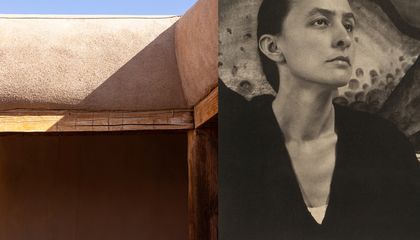
Georgia O’Keeffe, one of America’s most celebrated painters, is the subject of a Smithsonian Magazine feature that traces her artistic journey from a frustrated art student in New York to a visionary who rejected European influences in favor of a distinctly American style. The article recounts how a male classmate painted over her work to demonstrate Impressionist techniques, an experience that solidified her resolve to paint only as she saw. It follows her career through early charcoal exhibitions, her iconic flower paintings, and her eventual move to New Mexico, where the desert landscape and its bones became central to her work. The piece includes photographs of her Ghost Ranch studio and home, as well as a portrait by her husband Alfred Stieglitz.
This story matters because it reframes O’Keeffe’s legacy not merely as a female pioneer in a male-dominated art world, but as a deliberate architect of a uniquely American visual language. Her insistence on painting from her own perception—rather than imitating European masters—challenged the prevailing art-world hierarchy and helped define a national aesthetic. The article also highlights her meticulous control over her environment and her frustration with viewers who projected sexual meanings onto her flowers, underscoring her lifelong commitment to artistic autonomy. In an era still grappling with questions of cultural identity and originality, O’Keeffe’s example remains powerfully relevant.