
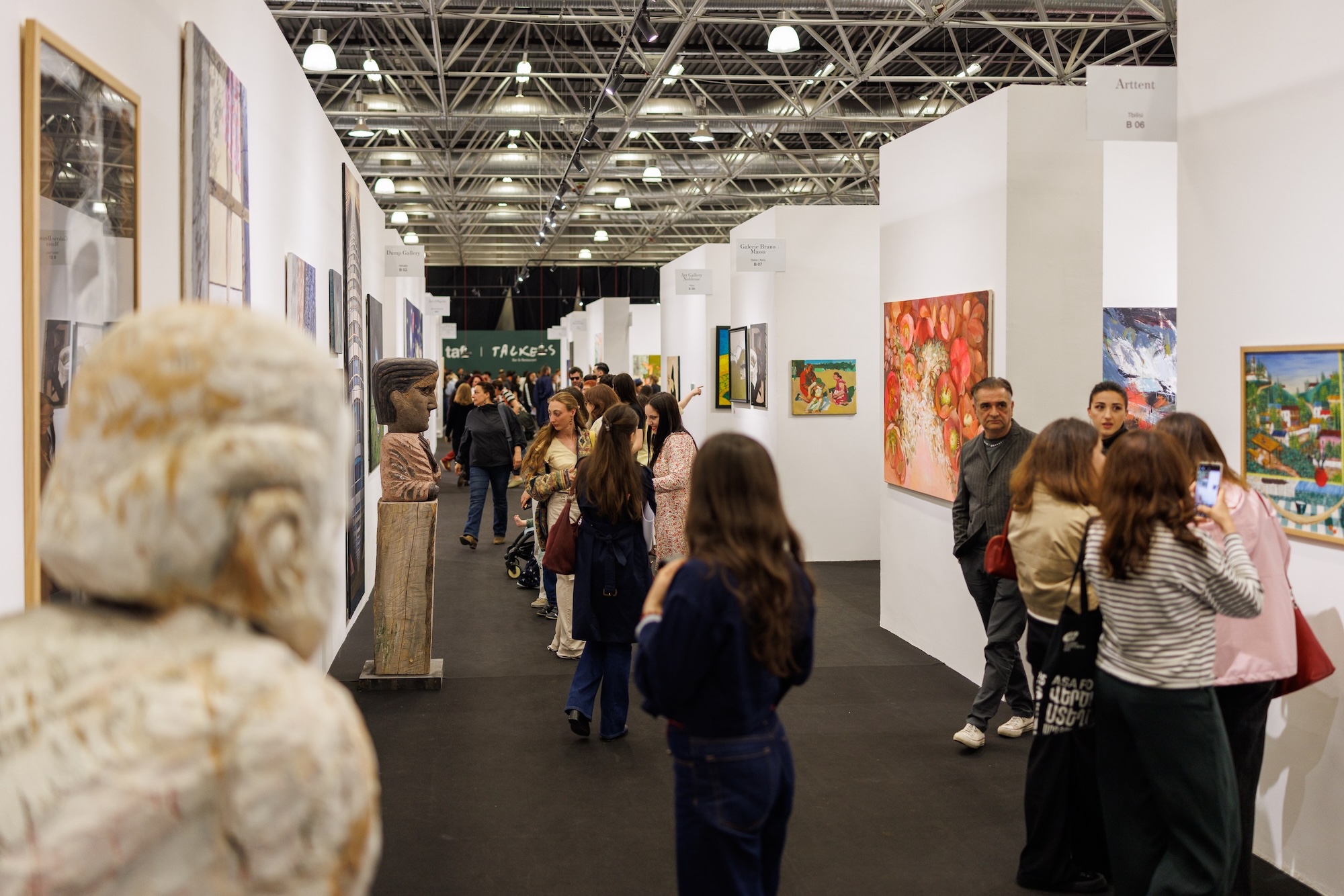
The article recounts a visit to the fifth edition of the Tbilisi Art Fair in Georgia, highlighting its focus on Georgian artists and those from neighboring countries like Armenia, Azerbaijan, Ukraine, and Central Asian nations. The fair, held at Expo Georgia, features over 30 galleries, a talks program, a photography section, and space for emerging artists. Notable works include Levan Mindiashvili's installation referencing traditional Georgian circular homes and alphabet, and off-site exhibitions like the 'chaos junk space' group show. The ReWoven project, preserving Azerbaijani rug-weaving traditions, held an exhibition in a church that also houses a mosque and synagogue. The article also mentions an exhibition of works by the late Georgian artist Karlo Kacharava at LC Quiesser gallery.
This matters because it showcases the vitality and distinctiveness of a smaller, non-Western art market, offering a refreshing alternative to dominant global hubs like London, New York, and Paris. The Tbilisi art scene is deeply rooted in local culture, language, and heritage, while also engaging with pressing political issues such as Russia's occupation of Georgian territories and LGBT+ rights. The fair and surrounding exhibitions demonstrate how contemporary art can serve as a platform for cultural preservation, political resistance, and community dialogue, highlighting the importance of regional art scenes in the global art ecosystem.