
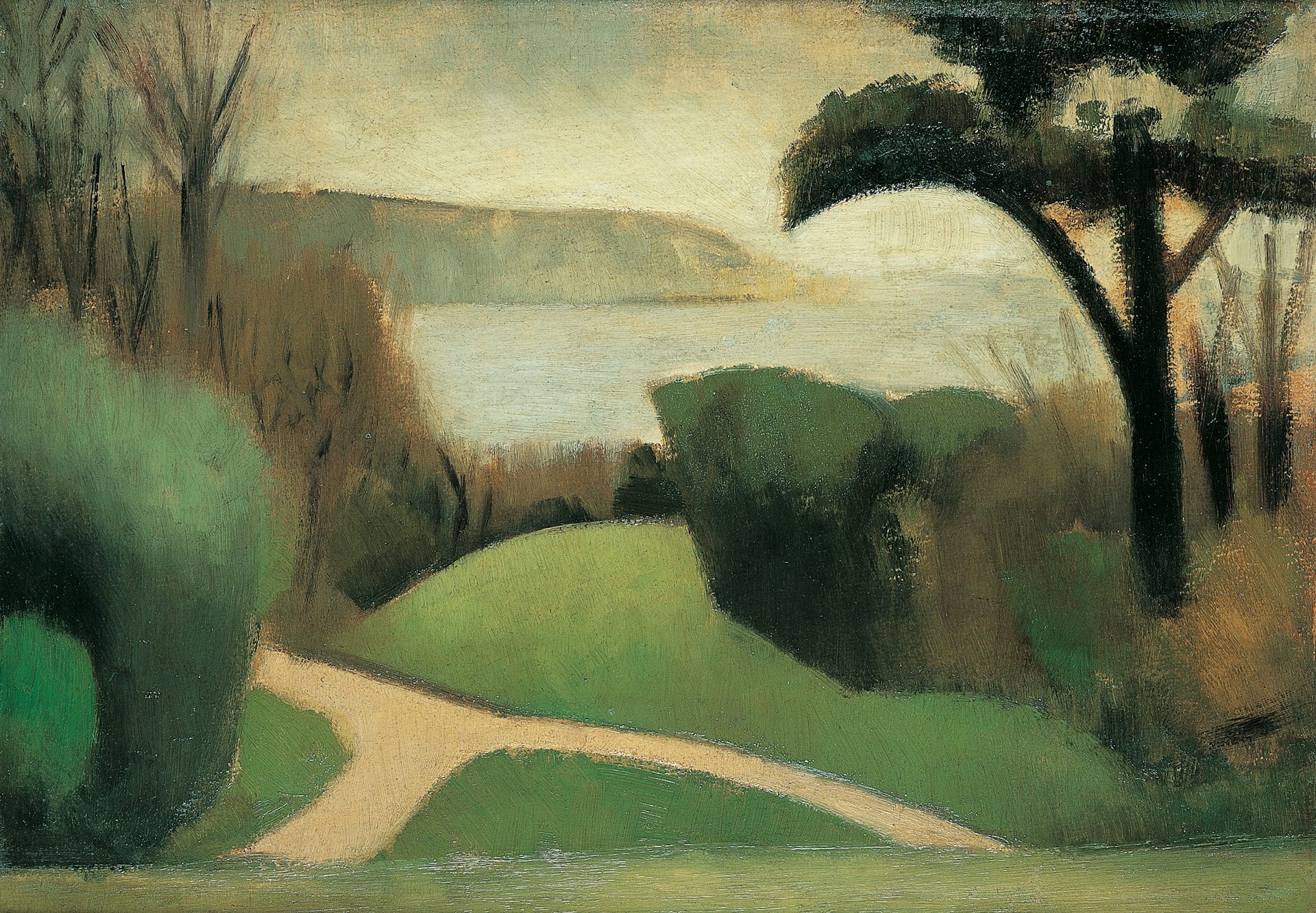
Pallant House Gallery in Chichester has opened "British Landscapes: A Sense of Place," an exhibition of 160 works by 60 artists drawn entirely from the gallery's own collection. Spanning from Thomas Gainsborough and the Smith brothers in the 18th century to Prunella Clough's inner-city wastelands of the 1990s, the show examines how British artists have responded to landscapes over 300 years. Highlights include works by Paul Nash, whose intense relationship with landscape and war experiences anchor the exhibition, alongside pieces by Edward Bawden, Eric Ravilious, Winifred Nicholson, Barbara Hepworth, and Wilhelmina Barns-Graham. The exhibition also features a room devoted to wood engraving and printmaking, an artform many artists turned to after World War I.
The exhibition matters because it offers a focused, collection-based exploration of how ideas of scenery have evolved in British art, revealing both the strengths and gaps in Pallant House's holdings. While Scottish and Welsh artists are well-represented, the show acknowledges underrepresentation of Scottish and Welsh landscapes, as well as the north of England, the Midlands, and East Anglia. By centering on Paul Nash's concept of "genius loci" (spirit of place), the exhibition highlights how artists used landscape to process war, industrialization, and rural change. It also raises questions about gender representation, noting that the wives of Bawden and Ravilious—Charlotte Bawden and Tirzah Garwood—were significant artists themselves, though not of landscapes.