
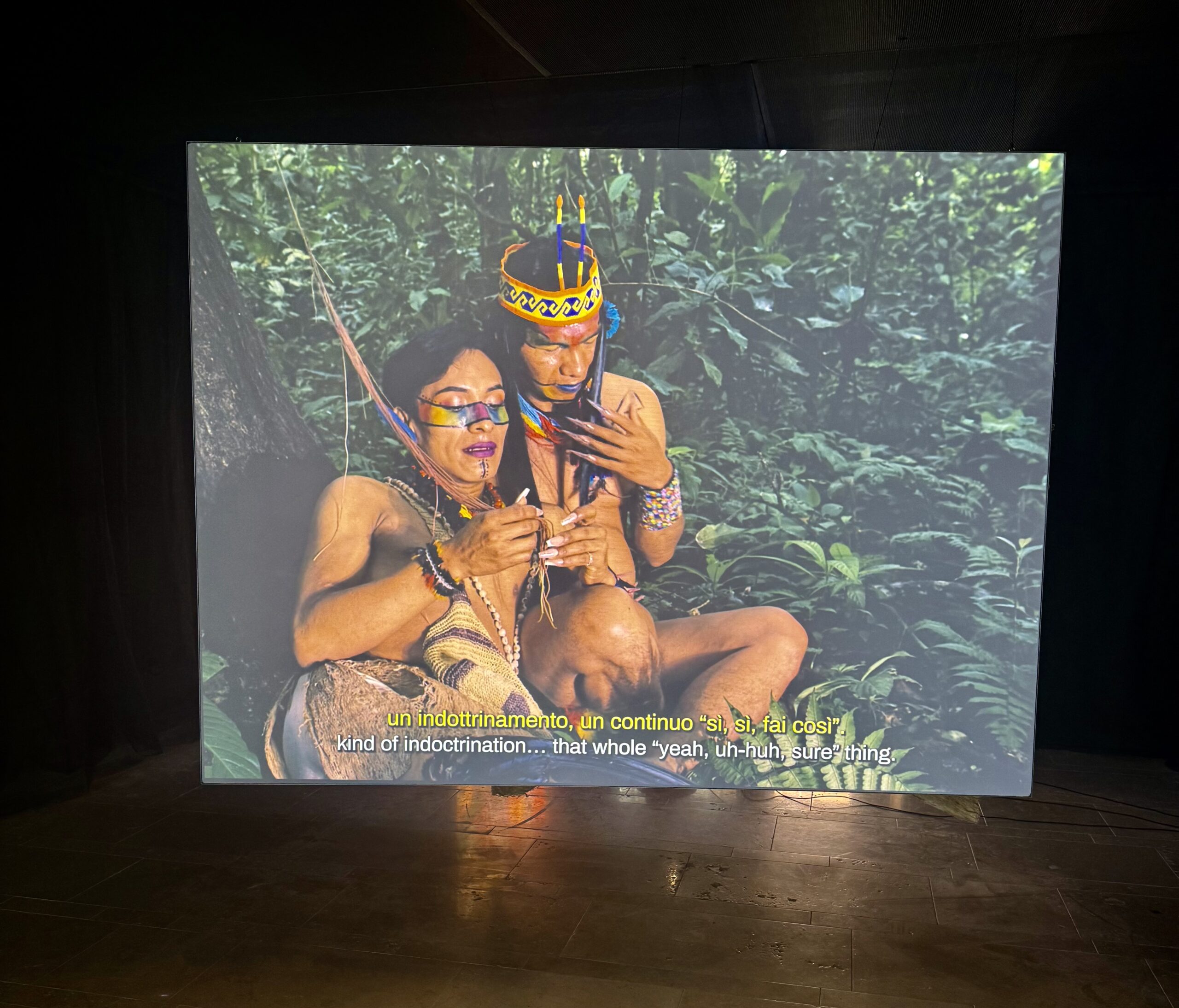
The article reviews the Ecuador Pavilion at the Venice Biennale, featuring the collaborative work of Tawna & Oscar, specifically the video piece 'Llaki' (2026) by the Tawana Collective. The author describes the pavilion as an emotionally explosive experience that accumulates memory, grief, tenderness, and politics rather than offering a conventional explanatory exhibition. The review highlights how the film resists Western narrative structures, instead inviting viewers to listen and feel its atmosphere, much like rain on different surfaces.
This review matters because it offers a critical perspective on how Indigenous and queer narratives from the Ecuadorian Amazon are presented within the prestigious context of the Venice Biennale. It argues that Tawna & Oscar's work challenges dominant art-world tendencies to flatten identity and spirituality into digestible museum experiences, instead embracing opacity and relational trust. The piece also connects the work to broader video art theory and the legacy of artists like Guillermo Gómez-Peña, underscoring the pavilion's significance in redefining how contemporary art can engage with emotional and political complexity.