
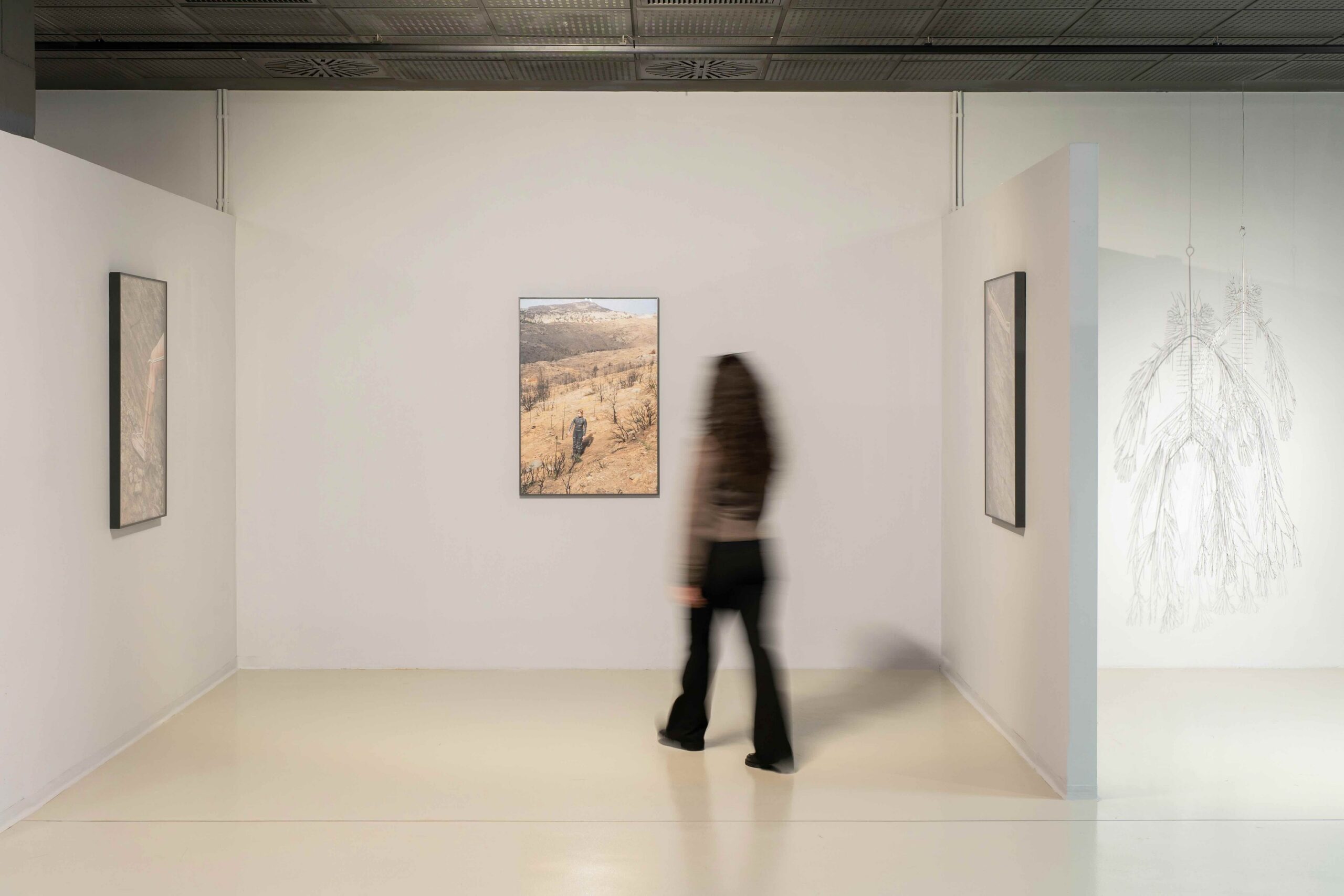
The article presents two concurrent exhibitions at Art Encounters Foundation in Timișoara, Romania: Nona Inescu's "Afterlife – Still Life" and Oláh Gyárfás's "The Broken Corner of the Cube," curated by Diana Marincu and Ami Barak respectively. Both artists explore what happens to materials after they lose their original function—stones, plants, textiles, and bodies—treating matter as active, memory-bearing entities rather than passive substances. Inescu's work engages geological and biological deep time, while Gyárfás focuses on inherited rural craft and the biographies of materials like hemp, hay, and wood.
This exhibition matters because it brings together two distinct artistic practices that converge on a timely philosophical question: the agency of matter in an era of ecological crisis and cultural displacement. By framing materials as carriers of history and transformation beyond human control, the show challenges anthropocentric views of nature and heritage. It also highlights the growing international relevance of Eastern European artists and curators, and the role of institutions like Art Encounters Foundation in fostering cross-cultural dialogue about sustainability, memory, and material intelligence.