
"Eine verspätete Präsenz der Bombe, die auf das Haus meiner Familie fiel"
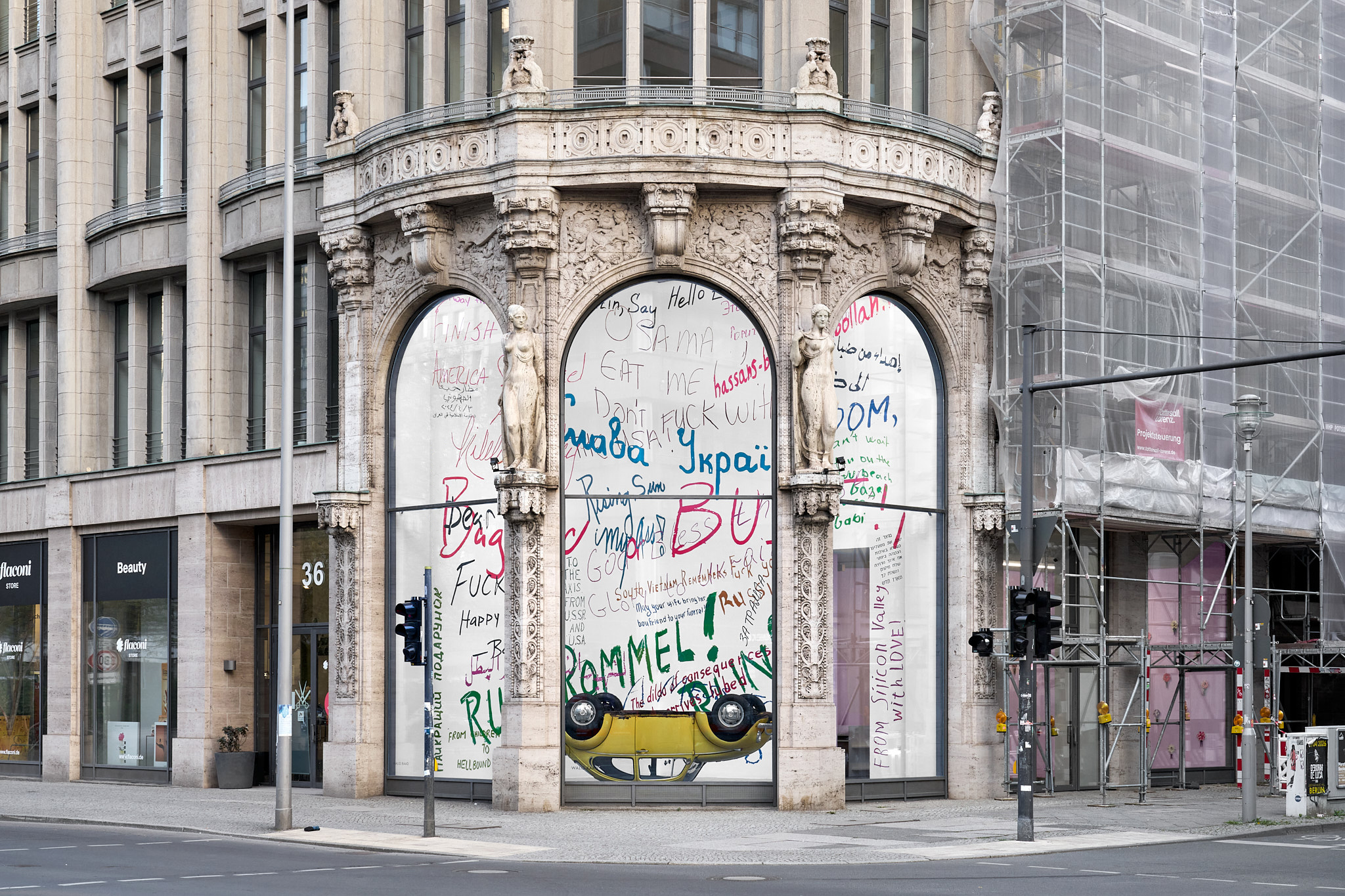
Walid Raad, the Lebanese-born artist known for his archival project "The Atlas Group (1989–2004)," is currently showing installations at the Venice Biennale's main exhibition and at Galerie Thomas Schulte in Berlin. In Berlin, his exhibition features a wrecked Volkswagen Beetle lying on its roof, along with wall texts claiming to be "Love Notes" written by soldiers on bombs. In an interview, Raad discusses his creative process, which he describes as oscillating between receiving and creating, rather than between fiction and reality. He explains that he often starts with a found document or object, digitally manipulates it until it reveals "what it should be," and then writes a story about who made it and why it was sent to him.
This matters because Raad's work continues to explore the lingering trauma of the Lebanese Civil War through a unique blend of fact and fabrication, challenging conventional distinctions between documentary and art. His presence at both the Venice Biennale and a Berlin gallery underscores his enduring relevance in contemporary art, particularly in how artists address political violence and memory. Raad's refusal to label himself an activist, despite his involvement with groups like the Gulf Labor Artist Coalition, highlights the complex role of the artist in politically charged contexts, making his practice a key reference for discussions on art, history, and ethics.