
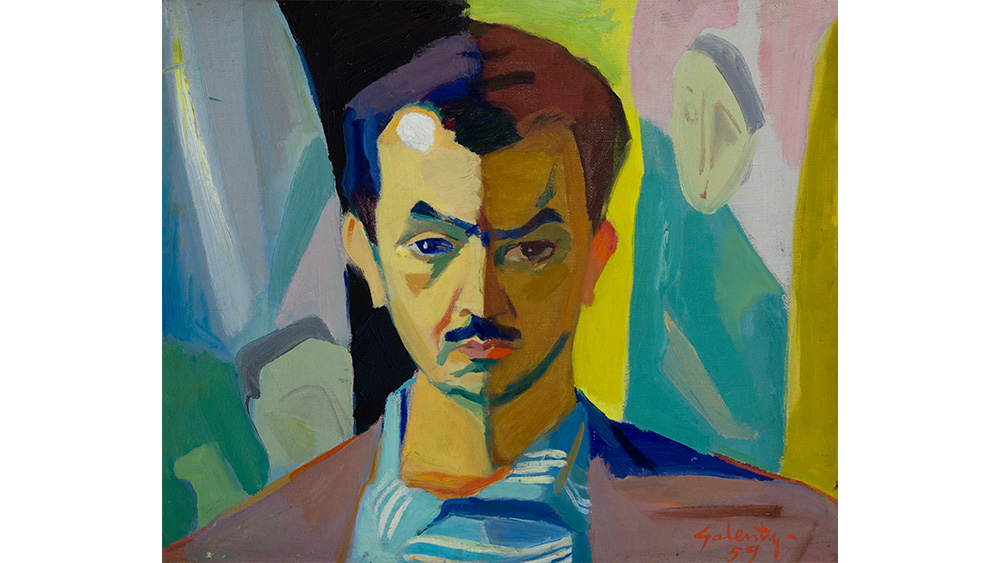
Haroutiun Galentz (1910–1967), a 20th-century Armenian modernist painter and survivor of the Armenian Genocide, is experiencing a resurgence of interest across Europe. A new English-language monograph, *Haroutiun Galentz: The Form of Colour*, was published by Skira last fall, with launch events in Paris and at the Nuhad Es-Said Pavilion for Culture in Beirut. In May, Ca’ Foscari University of Venice hosted a dedicated conference on his work, curated by Silvia Burini and organized by the Centre for Studies in Russian, Central Asian and Caucasian Art (CSAR), in collaboration with the Armenian Arts Council and Skira. The conference brought together scholars to discuss exile, memory, and modernity in Galentz’s oeuvre, which draws from his early training in the Beaux-Arts system and his time in Beirut, where he became a central figure in modern painting.
This revival matters because Galentz’s work has long evaded definitive categorization, partly due to his traumatic history as a genocide survivor. His canvases, known for vivid colors and emotional depth, represent a crucial link between Armenian diaspora experience and international modernism. The monograph and conference signal a broader reassessment of his legacy, positioning him as a significant cosmopolitan modernist whose influence spans Europe, Asia, and North America. The renewed attention also highlights the role of Armenian cultural institutions and collectors in preserving and promoting his art.