
A Lecce la pittura è meccanica con la mostra di uno dei protagonisti della Mec-Art
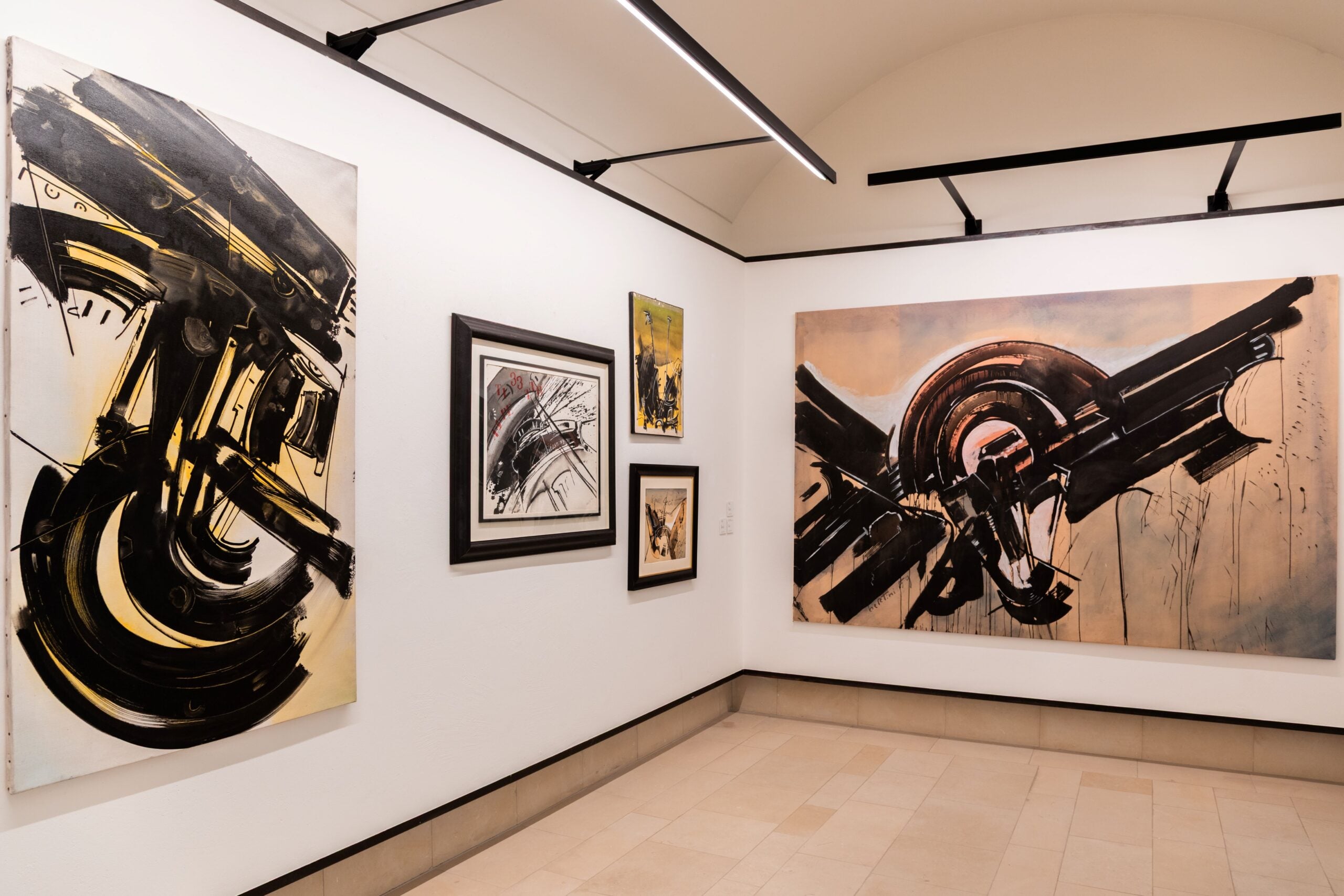
The Fondazione Biscozzi-Rimbaud in Lecce presents the retrospective "Gianni Bertini. Storia di un uomo senza storia," dedicated to Italian artist Gianni Bertini (1922–2010), a key figure in the Mec-Art (Mechanical Art) movement. Curated by his son Thierry Bertini and Roberto Lacarbonara, the exhibition features over 40 paintings, artist books, and an unpublished 1953 novel, spanning Bertini's career from the 1940s to the 1970s. It traces his evolution from the Gridi cycle and Informale phase through his adoption of mechanical reproduction techniques after joining Pierre Restany's Mec-Art manifesto in 1965.
This exhibition matters because it reexamines Bertini's pioneering role in New Dada, Pop Art, and Mec-Art, movements that challenged capitalist conformity and academic tradition through experimental use of photography, serial imagery, and industrial symbols. By highlighting his "mechanical turn" and the concept of "bertinisation"—the ironic appropriation of reality—the show positions Bertini as a crucial bridge between European avant-gardes and postwar mechanical art, offering fresh insight into a lesser-known but influential chapter of art history.