
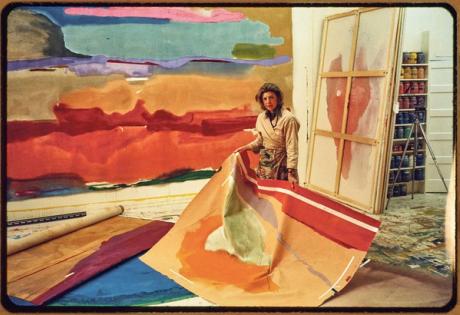
The Art Newspaper reports on a major survey of Helen Frankenthaler's work at Kunstmuseum Basel, the largest ever staged in Europe and her first institutional solo exhibition in Switzerland. The show brings together over 50 paintings spanning six decades, including highlights like 'Eden' (1956) and archival loans from the Helen Frankenthaler Foundation, such as annotated guidebooks from her European travels in the 1950s. It traces how Frankenthaler's encounters with Old Master paintings at the Museo del Prado and the Musée du Louvre profoundly shaped her abstract style, alongside influences from Jackson Pollock and her connections to Clement Greenberg and Peggy Guggenheim.
This exhibition matters because it presents a decisive curatorial argument: that Frankenthaler was an artist formed as much by European art traditions as by the New York School. By foregrounding her sustained dialogue with artists like Titian, Manet, and Marie Laurencin, the show challenges the prevailing narrative that her work emerged solely from American abstraction. It also reframes her career in the context of critical reception that often reduced her to her femininity—a characterization she actively rejected—offering a more nuanced understanding of her legacy as a modern pioneer deeply engaged with art history.